Why Time Moves Differently Across the Universe
Your head is ageing faster than your feet, the satellites in your phone’s sky run fast, and the early universe plays out in slow motion. A century after Einstein, clocks have caught him being right at every scale.
In October 1971, two American scientists boarded ordinary commercial airliners with some unusual luggage: four caesium-beam atomic clocks. The physicist Joseph Hafele and the astronomer Richard Keating flew them eastward around the planet, then westward, and on landing compared them with the master clocks at the United States Naval Observatory in Washington.
The clocks no longer agreed. The ones that had flown east had lost about 59 billionths of a second. The ones that had flown west had gained about 273 billionths. These were tiny differences, but they were real, and they matched what Albert Einstein's theories predicted. Time, it turns out, is not a single river flowing at one speed for everyone. It is personal.
Two ways to bend a second
Einstein gave us two reasons why clocks disagree. The first, from special relativity in 1905, is motion: a clock moving relative to you ticks more slowly than one sitting beside you. The second, from general relativity a decade later, is gravity: a clock deeper in a gravitational field ticks more slowly than one higher up.
Hafele and Keating's flights caught both effects at once. Up at cruising altitude the clocks sat a little further from the Earth's mass, which sped them up. Their motion slowed them down, but by how much depended on direction, because the Earth's surface is itself spinning eastward. Flying east added to that spin, and flying west partly cancelled it. Their 1972 paper in Science reported predictions of a 40-nanosecond loss eastward and a 275-nanosecond gain westward, comfortably close to what the clocks showed.
The relativity in your pocket
If that sounds like a laboratory curiosity, look at the blue dot on your phone's map. GPS satellites orbit about 20,000 kilometres up and travel at roughly 4 kilometres a second. Their speed slows their onboard clocks by about 7 microseconds a day. The weaker gravity at that height speeds them up by about 45 microseconds a day. The net result is that a satellite clock gains roughly 38 microseconds every day compared with a clock at sea level.
That sounds trivial, but GPS works by timing radio signals that cover about 300 metres in a microsecond. So engineers build the correction in. As the navigation engineer Pratap Misra explains in GPS World, each satellite's clock is deliberately set before launch to tick at 10.22999999543 MHz rather than 10.23 MHz, so that once it is in orbit it keeps pace with clocks on the ground. Without that adjustment, the ranges measured to the satellites could drift by up to about 11 kilometres between the daily clock updates. Einstein, in other words, is built into the school run.
A foot, then a millimetre
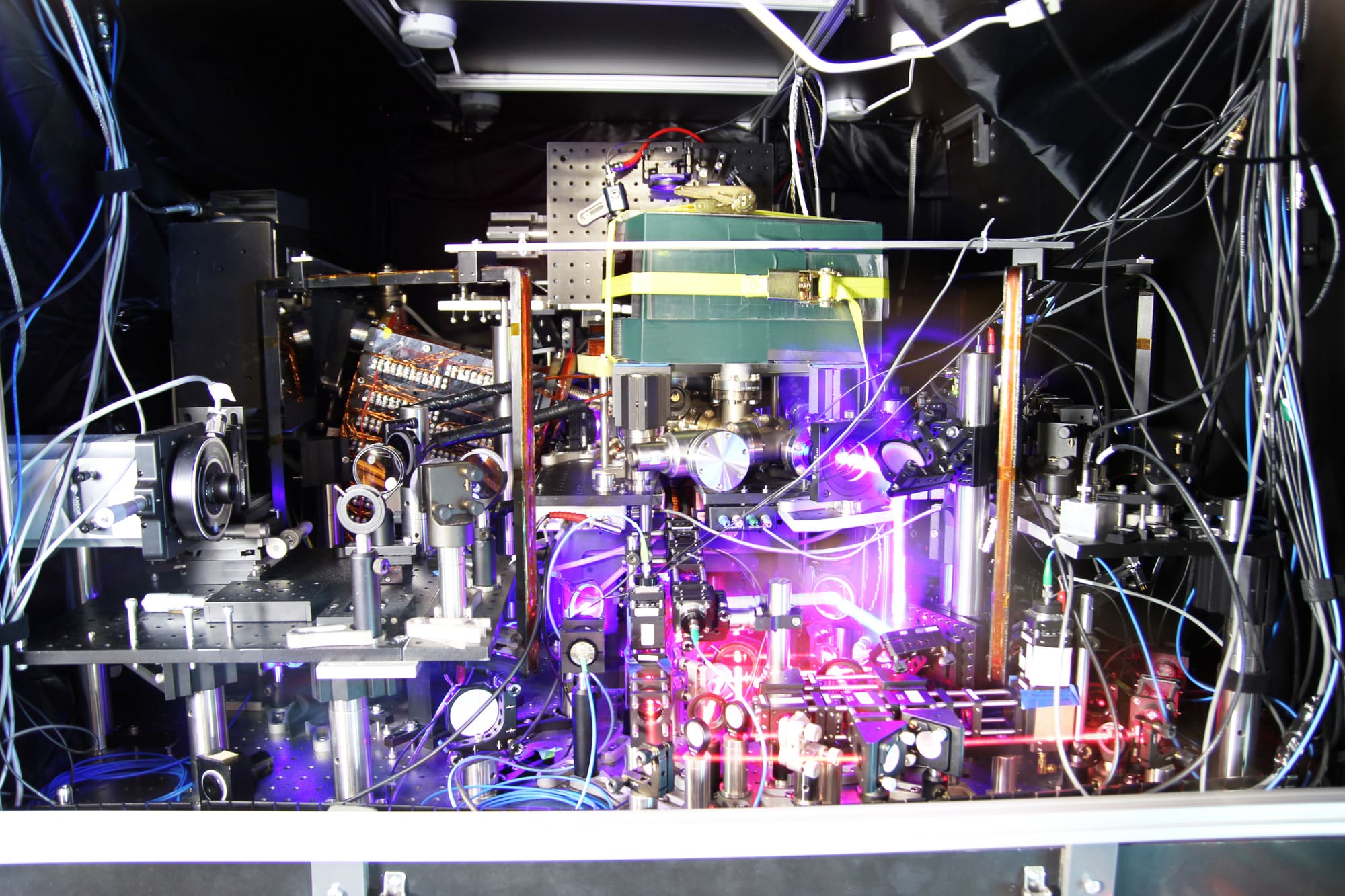
Seeing relativity once meant aeroplanes or satellites. Then clocks became good enough to bring it indoors. In September 2010, a team at the US National Institute of Standards and Technology (NIST) in Boulder, led by C. W. Chou and including the future Nobel laureate David Wineland, reported in Science on two "quantum logic" clocks, each based on a single aluminium ion, in separate laboratories linked by optical fibre. When they raised one clock by 33 centimetres, roughly a foot, by jacking up its laser table, the higher clock ran measurably faster. They also made one ion move at a few metres per second, slower than a car pottering along at 20mph, and watched its clock fall slightly behind.
NIST put the height effect in human terms: over a 79-year lifetime, someone living a foot higher up would age by about 90 billionths of a second more than their downstairs neighbour. Your head, strictly speaking, is older than your feet.
Your head, strictly speaking, is older than your feet.
Twelve years later the scale shrank again. In February 2022, Jun Ye's group at JILA, a joint institute of NIST and the University of Colorado, reported in Nature that they had measured gravity's effect on time within a single cloud of about 100,000 ultracold strontium atoms, roughly a millimetre tall. After 90 hours of data, the team could see a frequency difference of about one part in ten billion billion between the top and bottom of the cloud, exactly as general relativity predicts. Ye said the most exciting part was that the work could potentially connect quantum physics with gravity, which no one has yet managed to unite.
:::note The numbers
- 59 and 273 nanoseconds: lost going east and gained going west by Hafele and Keating's clocks in 1971
- 38 microseconds a day: how much faster GPS satellite clocks run than clocks on the ground
- 33 centimetres: the height change NIST's aluminium clocks detected in 2010
- About 1 millimetre: the height of the strontium cloud in which JILA saw time dilation in 2022
- Five times slower: how time appears to pass in the universe about a billion years after the Big Bang, as seen from Earth :::
The universe in slow motion
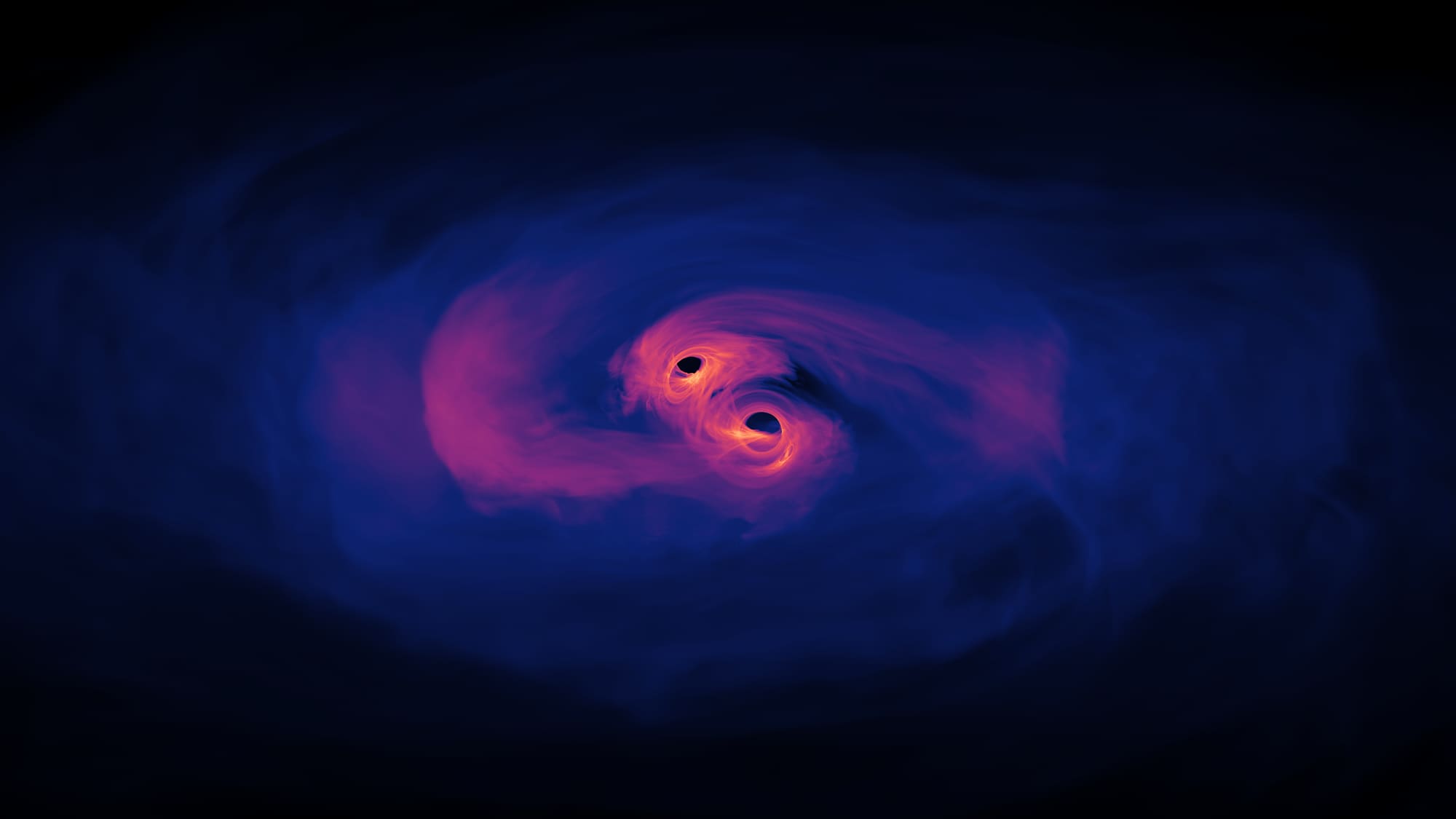
Now stretch the idea to billions of light years. Because the universe is expanding, light from very distant objects is stretched on its way to us, and so is the time in that light. Events in the young universe should appear, from our vantage point, to unfold in slow motion.
Exploding stars had already shown the effect back to about half the universe's age, but supernovae are hard to see further away. Quasars, the blazing black-hole-powered centres of young galaxies, are brighter but flicker unpredictably, and earlier searches had found no sign of time dilation in that flicker.
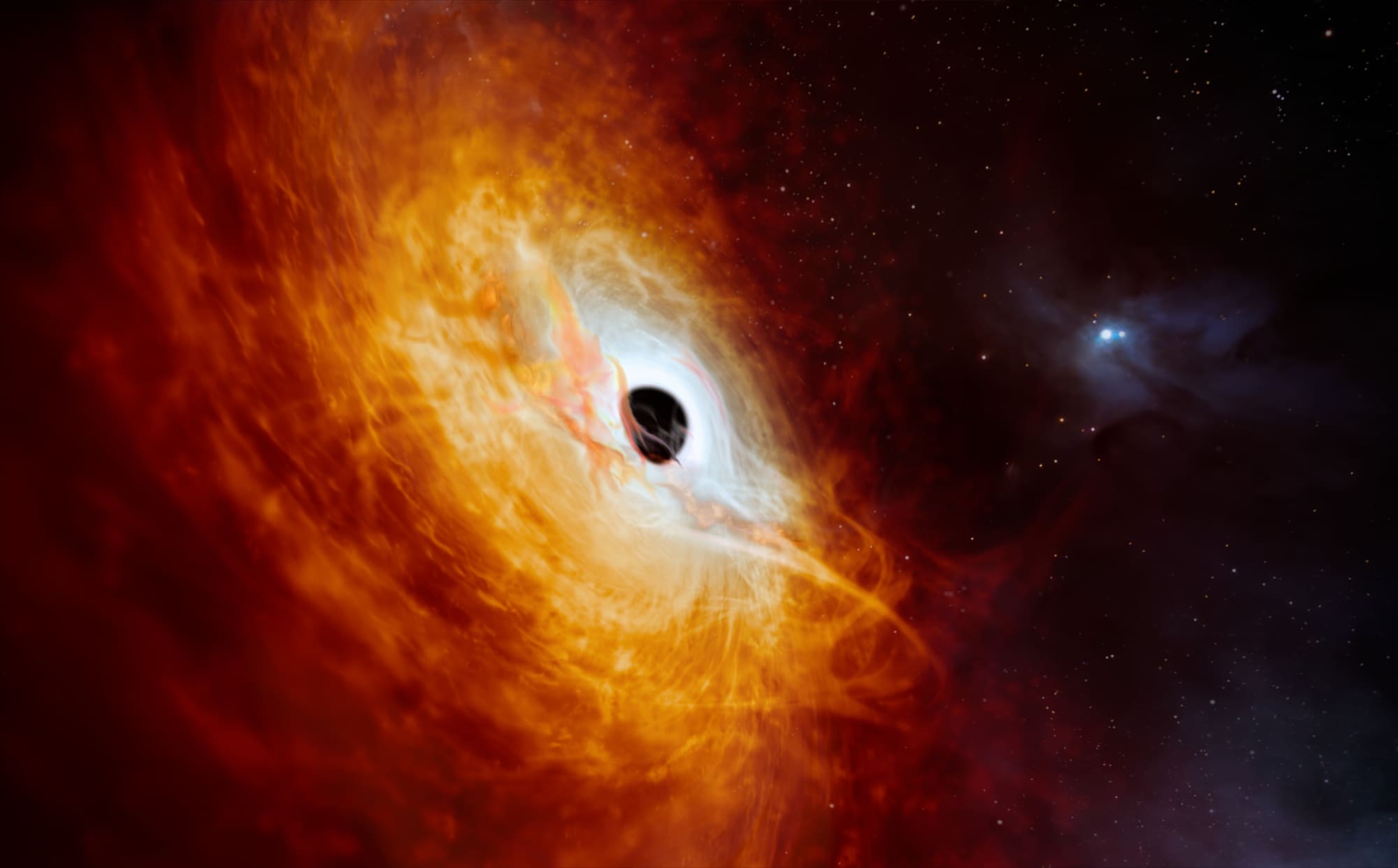
In July 2023, Geraint Lewis of the University of Sydney and Brendon Brewer of the University of Auckland reported in Nature Astronomy that the quasars had been obeying Einstein all along. They analysed 190 quasars watched over about 20 years by sky surveys including the Sloan Digital Sky Survey. By combining observations in different colours of light, and grouping bright quasars with bright and faint with faint, they could standardise each quasar's ticking. Looking back to when the universe was just over a billion years old, Lewis said, time appears to flow five times slower. An observer there would have felt nothing odd: a second felt like a second. It is only from here, across the stretched gulf of space, that their clock appears to drag.
Many clocks, one rule
Put these results side by side and one picture emerges. A clock on an airliner, a satellite overhead, a cloud of atoms a millimetre tall and a quasar flickering near the dawn of time all obey the same rule: how fast time passes depends on where you are and how you are moving.
This is useful as well as wonderful. The NIST team proposed linked optical clocks as a way to measure heights to about a centimetre, mapping the Earth's gravity. Ye believes clocks around 50 times more precise than today's best are within reach. At that point a clock becomes a gravity meter, and perhaps a probe of where quantum theory and gravity meet.
So next time you check the time, remember that the answer depends on where you are standing, and how fast you are moving.
Sources & further reading
- NIST: NIST pair of aluminum atomic clocks reveal Einstein's relativity at a personal scale (2010)
- NIST: JILA atomic clocks measure Einstein's general relativity at millimeter scale (2022)
- Bothwell et al., "Resolving the gravitational redshift across a millimetre-scale atomic sample", Nature 602 (2022), arXiv preprint
- Hafele, "Performance and Results of Portable Clocks in Aircraft" (1971 report)
- Hafele–Keating experiment overview (Wikipedia)
- Pratap Misra, "Inside the Box: GPS and Relativity", GPS World
- ScienceDaily: Quasar 'clocks' show universe was five times slower soon after the Big Bang (University of Sydney, 2023)
- Space.com: Time appeared to move 5 times more slowly in the first billion years after the Big Bang
Filed under Science. Spotted an error? Tell the editors.