The Beautiful Mystery of Black Hole Vibrations
Strike a black hole and it rings like a bell, with a deep note, fading overtones and, a new study shows, the occasional strange duet in which two notes become one.
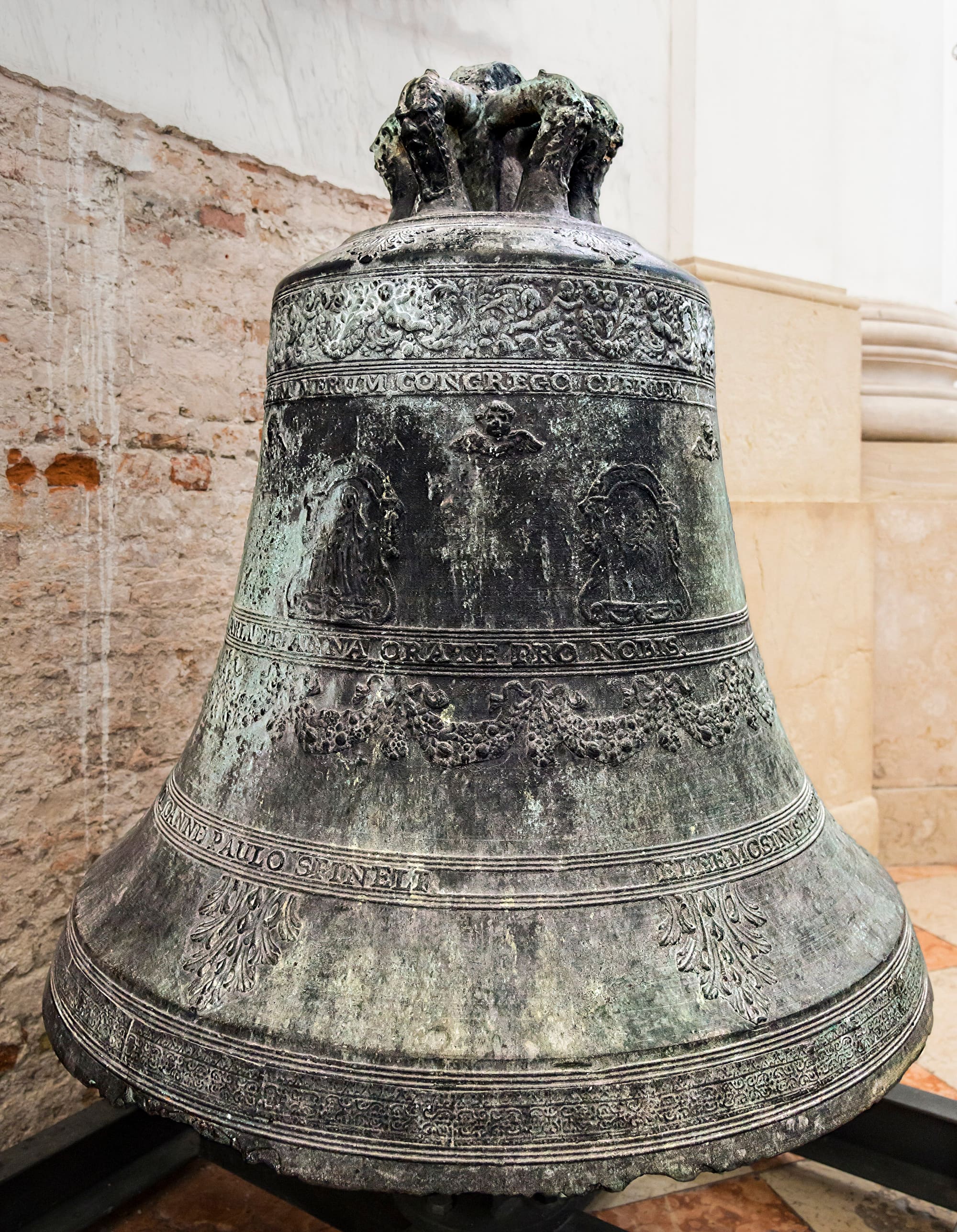
Tap a wine glass and it sings. Strike a church bell and you hear a deep main tone wrapped in a shimmer of higher overtones, all slowly fading into the air. Both are fixed by the bell's size, shape and metal. A trained ear can tell a lot about a bell without ever seeing it.
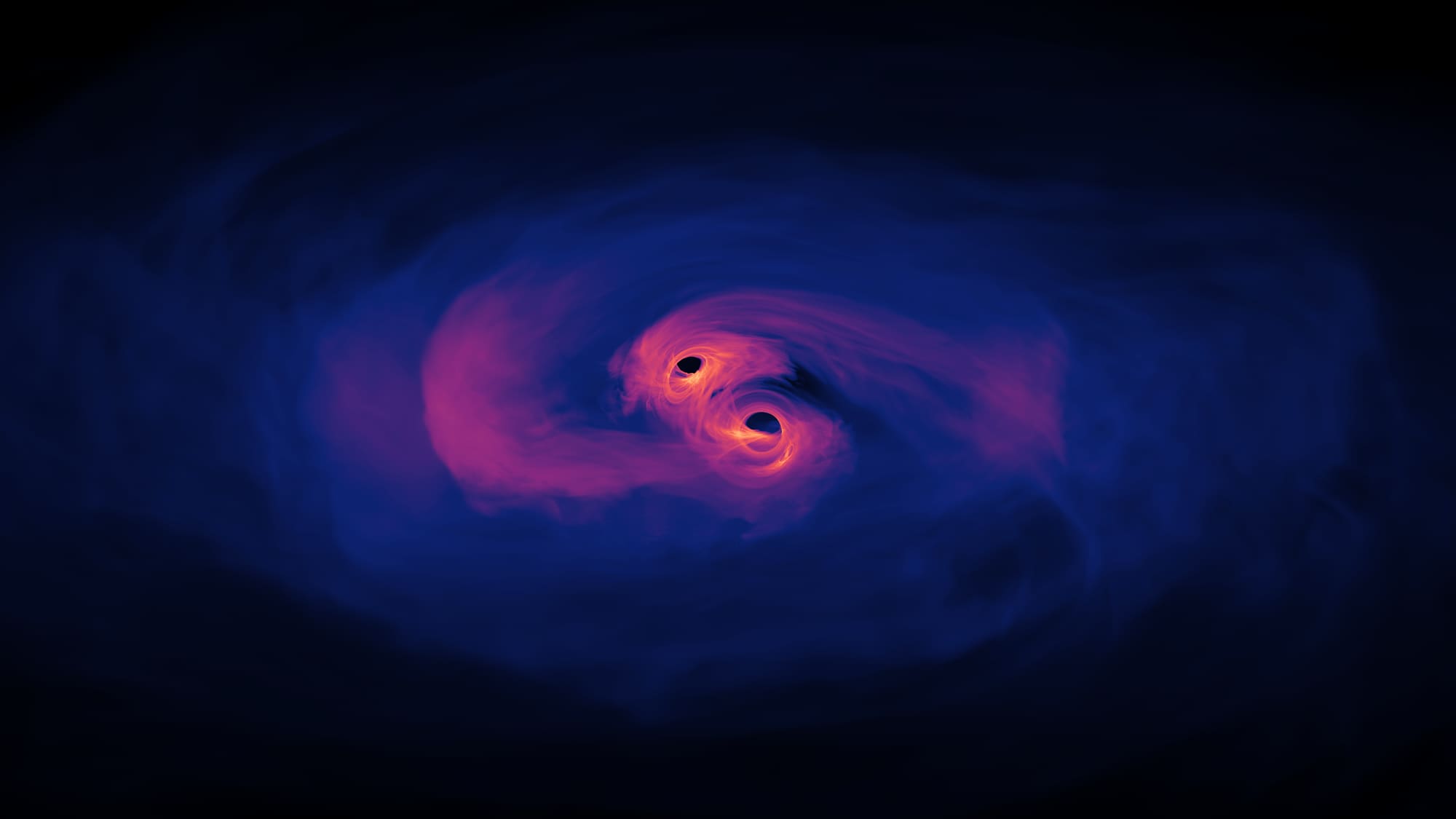
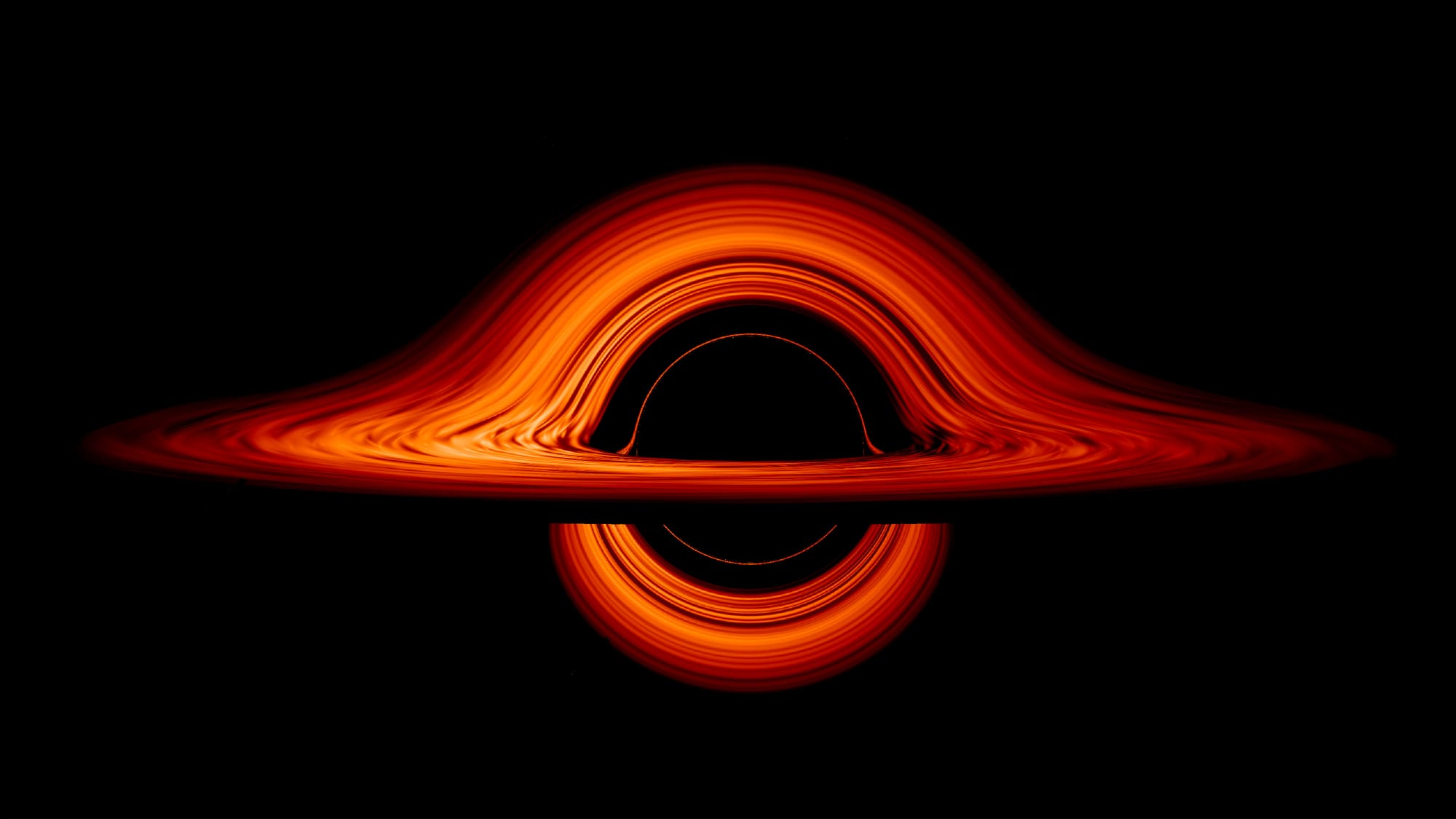
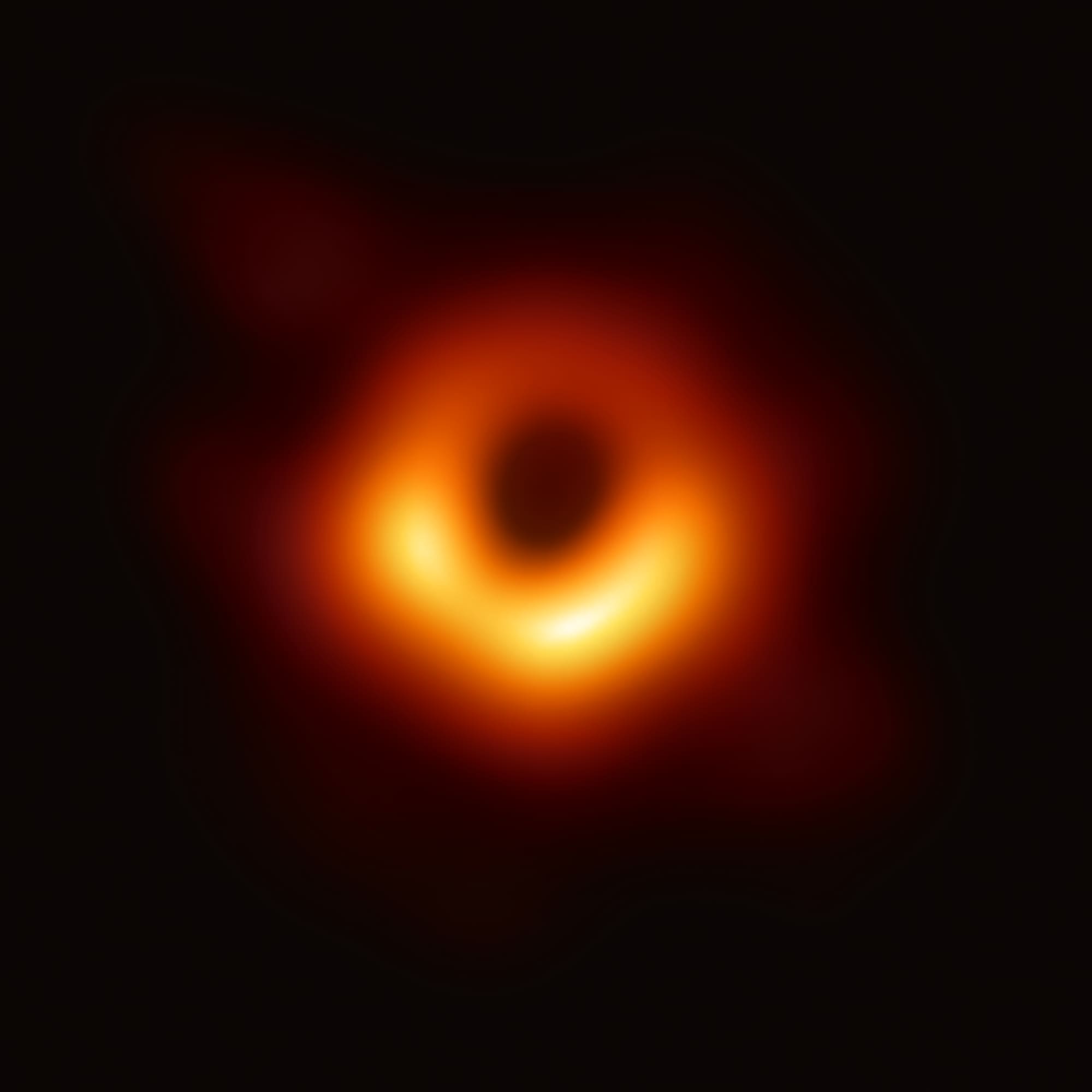
Black holes, astonishingly, do the same thing. When two of them merge, the newborn black hole is left lopsided and quivering, and it settles down by "ringing" in a set of pure, fading tones. Physicists call them quasinormal modes. They are the closest thing the universe has to a black hole's voice, and a new study suggests that voice is stranger and more musical than anyone expected.
The bell that cannot help ringing
The idea goes back to 1970, when the Indian physicist C. V. Vishveshwara published a short paper in Nature. In a thought experiment, he threw pulses of gravitational waves at a simple, non-spinning black hole and watched what came back. Whatever he threw, the black hole answered with the same characteristic decaying ring. Within a few years others had confirmed and calculated these tones in detail.
Each quasinormal mode has a pitch and a rate of fading, which physicists fold into a single "complex" frequency. The ringing dies away extraordinarily quickly, its energy pouring out as gravitational waves, much as a bell's sound leaks into the air.
Here is the remarkable part. According to Einstein's general relativity, an astrophysical black hole is described by just two numbers, its mass and its spin. So its whole spectrum of tones is fixed by those two numbers. Measure two notes and you know the instrument; measure a third and you can check that it really is the one Einstein described. This is the idea behind "black hole spectroscopy", a phrase borrowed from the way chemists identify elements by the colours of light they emit.
Hearing the overtone
For years, hearing more than one note was a struggle. The overtones of a black hole, like the high partials of a bell, fade much faster than the fundamental tone, so they sink into detector noise almost at once.
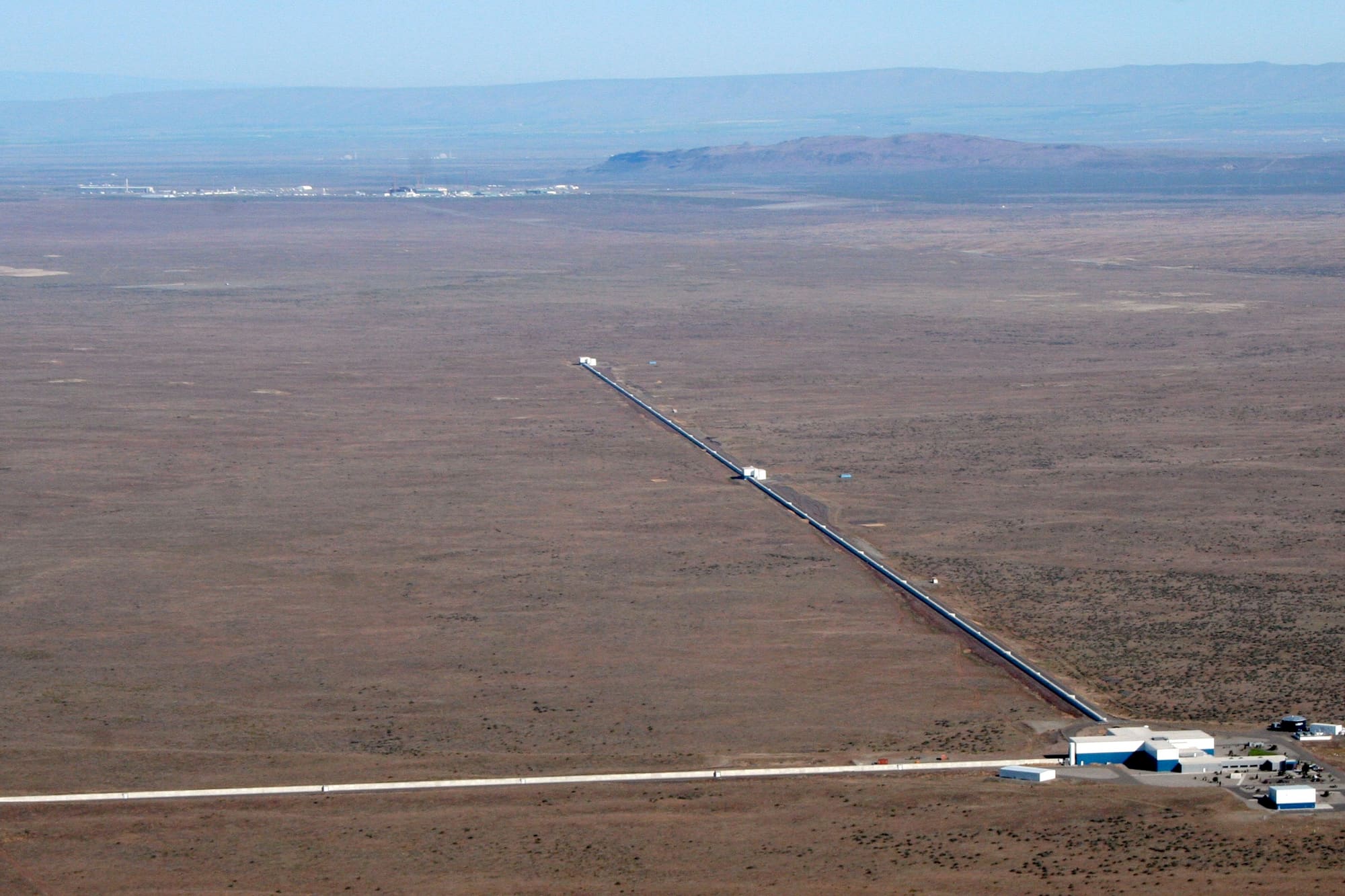
That changed with an event called GW250114, a merger of two black holes picked up by the two LIGO detectors in the United States on 14 January 2025. It was the clearest gravitational-wave signal yet, about three times louder than the very first detection in 2015. In a paper in Physical Review Letters in January 2026, the LIGO, Virgo and KAGRA collaborations reported that the ringdown could not be explained by one tone alone. At least two were needed: the fundamental and its first overtone, which they could follow for only about three milliseconds after the merger. A third, higher tone was also constrained. All matched the predictions for a spinning Einstein black hole to within tens of per cent.
As the measurements sharpen, theorists are asking a subtler question: what happens when two of a black hole's notes come very close together?
When two notes become one
That is the subject of "Black hole quasinormal mode resonances", by Yiqiu Yang of Peking University, Emanuele Berti of Johns Hopkins University and Nicola Franchini of the Instituto Superior Técnico in Lisbon, published in Physical Review Letters in 2025.
Anyone who has tuned a guitar knows the slow, pulsing "beat" of two strings almost in tune. Black hole tones can draw close in a similar way. As you change the properties of a black hole, say its spin, two of its modes can drift towards each other. Earlier studies of spinning and electrically charged black holes found that, often, the two tones approach and then veer apart, as if they repel each other, a behaviour called an avoided crossing. The authors note that it turns up quite generically.
Sometimes, though, the two tones do not veer apart. At special combinations of settings they become exactly the same, in both pitch and fading rate. Physicists call this an exceptional point. It has been seen for black holes disturbed by a hypothetical field of massive particles, at particular values of the black hole's spin and the particles' mass.
Walk once around this point and the fundamental tone turns into the first overtone, and the overtone into the fundamental.
The paper's first insight is geometric. Near an exceptional point, the two tones are not really two separate things at all. They are two branches of a single mathematical surface, a kind of spiral staircase that mathematicians call a Riemann surface. Walk once around this point and the fundamental tone turns into the first overtone, and the overtone into the fundamental. The black hole's notes, in other words, depend on the path you took to reach a given setting, not just on where you ended up. The authors describe this as hysteresis.
:::note How the study worked
- The method: mathematical analysis of tones near "exceptional points", plus simulations of a simple black hole tuned so two tones coincide
- The key finding: at resonance, the signal includes a part that grows in proportion to time before the fading takes over
- Why it matters: ignoring that term gave pitch errors of up to 17 per cent
- The limits: the work uses theory and simulations, not real detector data :::
Pushing the swing
The second insight concerns what you would actually hear. When two tones merge, the paper shows, the ringing contains a component that grows steadily with time, multiplied by the usual fading tone. The authors compare it to a harmonic oscillator driven at exactly its natural frequency, like a child on a swing pushed at precisely the right moment each time, whose arc grows with every push.
Unlike the swing, the black hole does not run away. The fading always wins in the end, so the authors stress that the growth causes no instability. But it does change the shape of the sound in those first precious milliseconds.
To see how much that matters, the team built a test case: a simple black hole with a small bump added to the gravitational landscape around it, tuned so that the fundamental and first overtone coincided. They then tried to recover the true pitch from the simulated ringing. For an ordinary black hole, standard analysis got it right to within 0.05 per cent. For the resonant case, treating the signal as a simple sum of fading tones produced errors as large as 17 per cent, and the answer refused to settle down. When the growing term was included, the error dropped below 5 per cent early on and quickly approached the correct value.
A strange kind of harmony
There is a deeper twist. In ordinary quantum physics, coinciding energy levels often point to something hidden: in the hydrogen atom, for example, they arise from a hidden symmetry. The authors argue that black hole degeneracies are different, because the two merged modes share the very same shape. That is a hallmark of "open" systems that leak energy, the kind physicists call non-Hermitian. Exceptional points are studied in optics and acoustics laboratories, where settings can be tuned at will. Nobody can retune a real black hole.
Will future detectors hear these duets? The paper leaves open how often nature arranges them. But the authors suggest an intriguing possibility: in some alternative theories of gravity, resonances could make extra, hidden fields easier to detect in the ringing. If Einstein's theory ever needs revising, the first hint might come not from a black hole's silence but from an unexpected harmony in its song.
Sources & further reading
- Yang, Berti and Franchini, "Black hole quasinormal mode resonances", arXiv:2504.06072 (Phys. Rev. Lett. 135, 201401, 2025)
- Full text (HTML) of arXiv:2504.06072
- LIGO science summary: Detecting the GW250114 signal and testing general relativity
- LIGO, Virgo and KAGRA, "Black hole spectroscopy and tests of general relativity with GW250114" (Phys. Rev. Lett. 136, 041403)
- C. V. Vishveshwara, "Scattering of gravitational radiation by a Schwarzschild black-hole", Nature 227 (1970)
- Ferrari and Gualtieri, "Quasi-normal modes and gravitational wave astronomy", arXiv:0709.0657
Filed under Science. Spotted an error? Tell the editors.