Why Staying Social Matters as We Get Older
Friendship is usually filed under pleasure, not health. Eight decades of research, and a new warning from the World Health Organization, suggest it belongs in both.
In 1938, as the Great Depression dragged on, researchers at Harvard began following 268 second-year undergraduates to find out what made people thrive. They examined the young men, interviewed them, tracked their careers, marriages and health, and kept going for decades. Later the study took in 456 young men who had grown up in some of Boston's poorest neighbourhoods. When the Harvard Gazette reported on the study in 2017, 19 of the original Harvard men were still alive, all in their mid-nineties.
It is now among the longest-running studies of adult life ever undertaken. And when its current director, the psychiatrist Robert Waldinger, is asked what it has revealed, his answer surprises people. It is not cholesterol, or wealth, or fame. It is relationships.
Eighty years in the making
The Harvard Study of Adult Development found that how satisfied the men were with their relationships at the age of 50 predicted their physical health in later life better than their cholesterol levels did. "The people who were the most satisfied in their relationships at age 50 were the healthiest at age 80," Waldinger told the Harvard Gazette in 2017. Close, trusting relationships also seemed to protect the brain: people who felt they could count on a partner in hard times tended to keep their memories sharper for longer.
A single study of American men, however long, can only tell us so much. The question is whether the pattern holds more widely. It does.
In 2010 Julianne Holt-Lunstad, a psychologist at Brigham Young University, and her colleagues pooled the results of 148 studies covering more than 300,000 people, followed for an average of about seven and a half years. Those with stronger social relationships had roughly a 50 per cent greater likelihood of being alive at the end of follow-up than those with weaker ties. The association held regardless of age, sex, initial health or cause of death, and the authors concluded that it was comparable in size to well-established risk factors for mortality. The most powerful measures were not simple ones, such as living alone, but richer pictures of how woven into family, friends and community a person was.
A global health issue
For years, findings like these sat on the edge of mainstream medicine. That has changed. In June 2025 the World Health Organization's Commission on Social Connection, co-chaired by former US Surgeon General Vivek Murthy, published its flagship report.
The figures are sobering. About one in six people worldwide is affected by loneliness, which the Commission defines as the painful gap between the connection you want and the connection you have. Loneliness is linked to an estimated 871,000 deaths a year, about 100 every hour. Social isolation, the objective lack of contact, affects up to one in three older adults. The WHO links loneliness and isolation with higher risks of stroke, heart disease, diabetes, cognitive decline and early death, and says lonely people are twice as likely to develop depression.
Loneliness is the gap between the connection you want and the connection you have.
The Commission was clear that this is not only a matter for individuals. It called on governments to treat social connection as a public health priority and to invest in the places that bring people together, such as parks and libraries.
The dementia connection
The most striking evidence for older adults concerns the brain. In July 2024 the Lancet Commission on dementia prevention, intervention and care, led by Gill Livingston at University College London, updated its list of risk factors that people can potentially change. There are now 14, and together they may account for around 45 per cent of dementia cases worldwide. Social isolation is on the list.
So is hearing loss, which the Commission ranks, alongside high cholesterol in midlife, as the joint single biggest factor, linked to about 7 per cent of cases. It recommends that hearing aids be made available to everyone who needs them.
It is not hard to see how these two risks can feed each other. When conversation becomes an effort, a noisy restaurant or a family gathering can feel more exhausting than enjoyable, and it becomes tempting to stay at home. Fewer conversations mean less of the varied, demanding mental work that social life involves. Treating hearing loss may therefore matter not only for hearing, but for keeping the doors to social life open.
The quiet work of keeping in touch
Relationships, like muscles, seem to need regular use. Friendships drift unless tended, and later life brings particular pressures: retirement removes the daily company of colleagues, children move away, partners and friends fall ill or die. For many people, the social world quietly contracts without anyone choosing it.
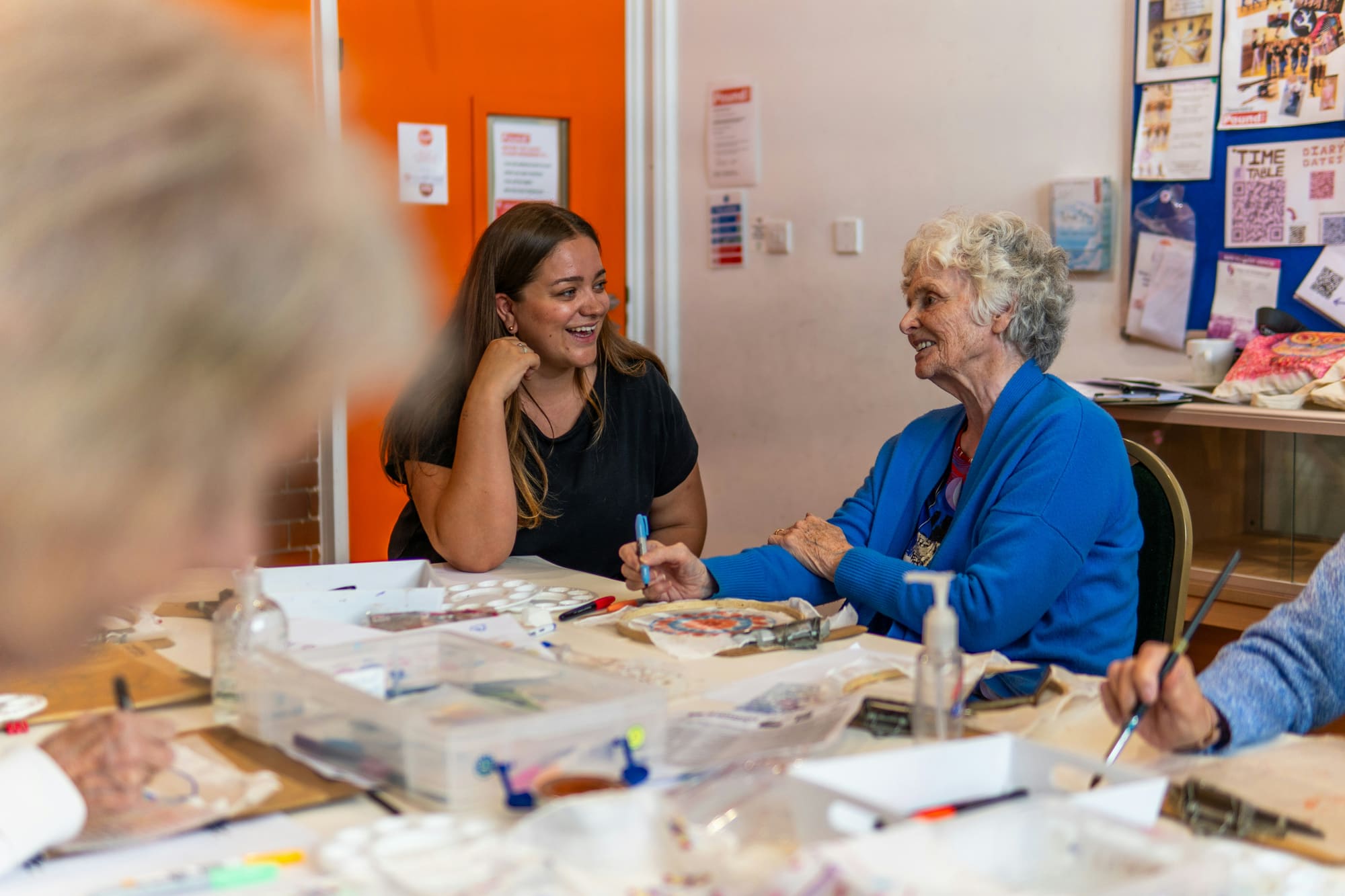
The WHO's suggestions are deliberately humble. Reach out to a friend. Put your phone away during conversations. Say hello to neighbours. Join a local group, or volunteer. None of these will transform a life overnight, but the research suggests that their accumulated weight is considerable. Quality matters as much as quantity, too: a few warm, dependable relationships appear to do more good than a crowded diary of acquaintances.
If you have noticed that you are finding conversations harder to follow, it is worth asking your GP or a local pharmacy about a hearing check. And if loneliness has settled in and is affecting your mood, your GP is a sensible place to start. As the people of the Harvard study discovered over a lifetime, the effort of staying connected is rarely wasted.
Sources & further reading
- Harvard Gazette: Over nearly 80 years, Harvard study has been showing how to live a healthy and happy life (2017)
- Holt-Lunstad J, Smith TB, Layton JB. Social relationships and mortality risk: a meta-analytic review. PLoS Medicine, 2010
- World Health Organization: Social connection linked to improved health and reduced risk of early death (2025)
- WHO Commission on Social Connection
- Livingston G et al. Dementia prevention, intervention, and care: 2024 report of the Lancet standing Commission. The Lancet, 2024
- Alzheimer Europe: 2024 Lancet Commission identifies 14 modifiable risk factors
- North London NHS Foundation Trust: Two new risk factors identified in Lancet Commission report (2024)
This article is for general information and is not a substitute for personal medical advice. If you have concerns about your health, please speak to your GP or a qualified professional.