How Artificial Intelligence Is Helping Us Listen to the Universe
When a gravitational-wave alert goes out, telescopes around the world have minutes to decide whether to chase it. A machine-learning system called GWSkyNet-II now helps them tell a cosmic collision from a hiccup in the detector.
Imagine you run a large telescope, and in the middle of the night a message arrives: something may have just collided in the distant universe, somewhere in a patch of sky that may span tens or even hundreds of square degrees. Do you abandon your carefully scheduled observations and go looking? The light you hope to catch may fade within hours. But the alert might also be nothing more than a twitch in a detector on the other side of the planet.
That is the daily dilemma of gravitational-wave astronomy, and it is where a quietly clever piece of artificial intelligence has found its niche. It does not hunt for signals itself. Instead, it acts as a second opinion, a fast and sceptical colleague asking of each alert: does this look real?
A message from the dark
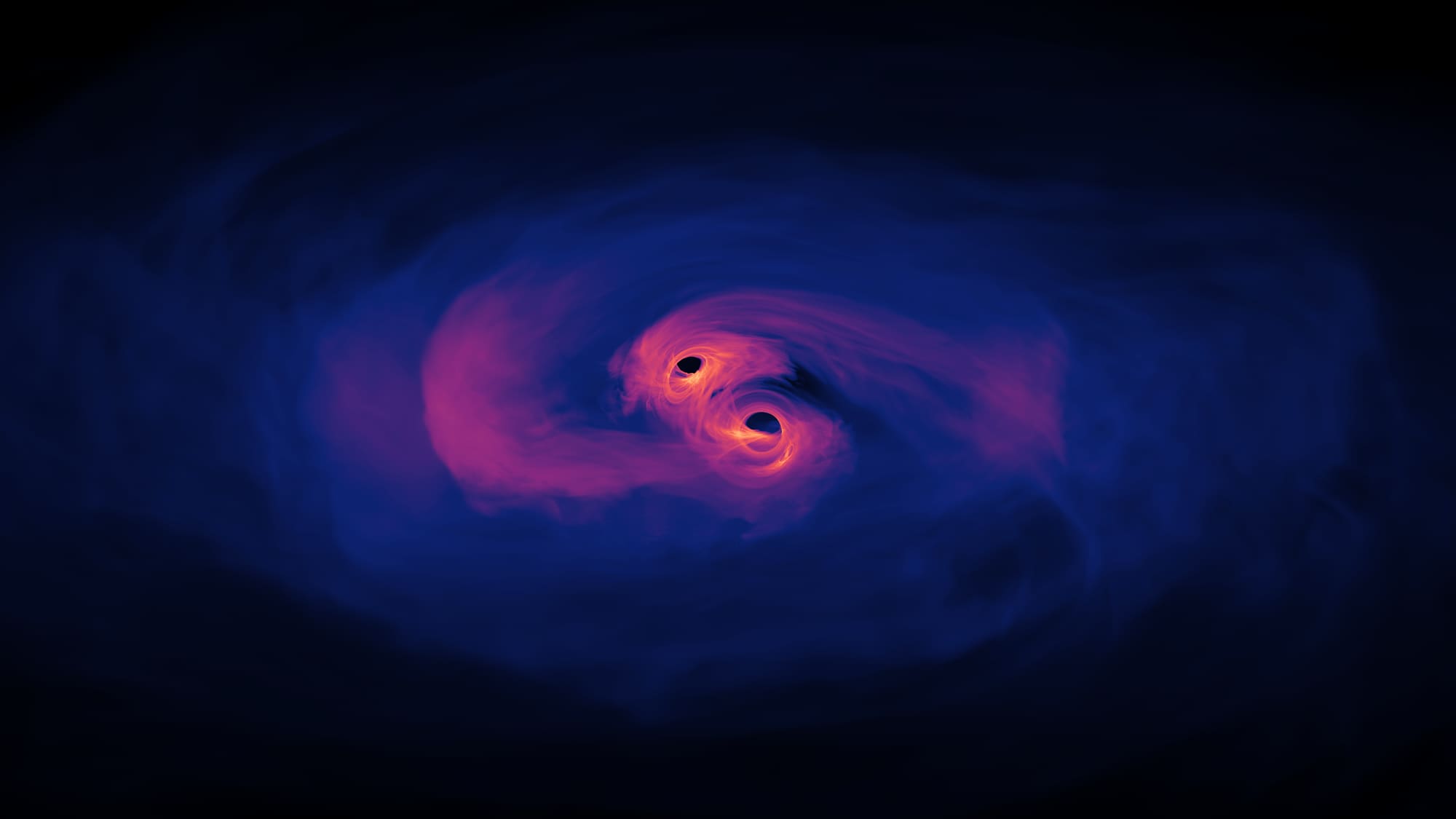
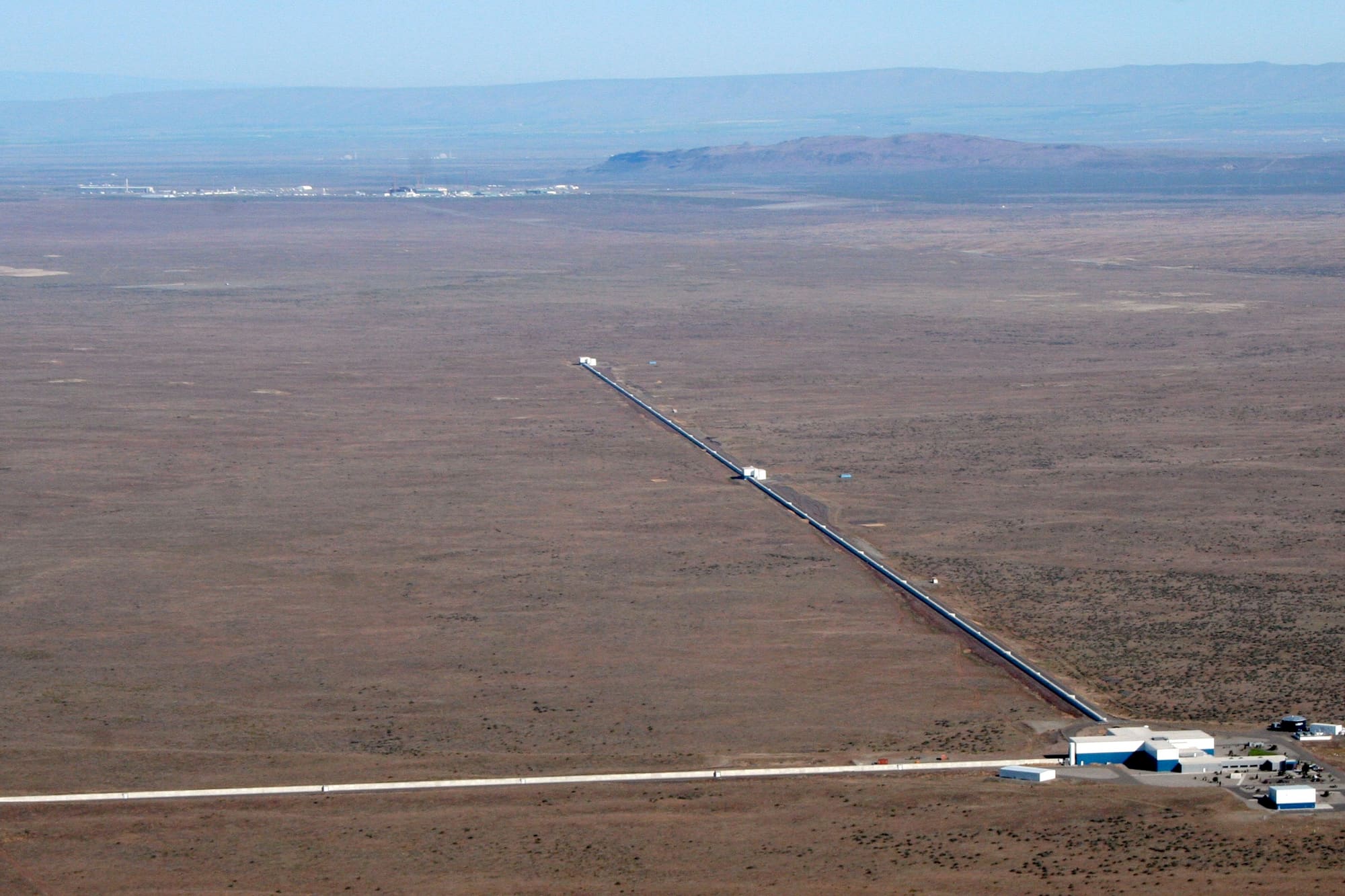
Gravitational waves are ripples in space-time thrown off when black holes or neutron stars spiral together and merge. The LIGO detectors in the United States, Virgo in Italy and KAGRA in Japan listen for them together as the LIGO-Virgo-KAGRA collaboration, usually shortened to LVK.
When their computers spot a promising candidate, the system issues public alerts through NASA's General Coordinates Network and a platform called SCiMMA. For very loud neutron-star events, an Early Warning notice can go out up to tens of seconds before the merger itself. A Preliminary notice follows automatically within minutes. After human experts have vetted the event, an Initial notice and a human-readable bulletin are issued; if the candidate turns out to be a glitch, a Retraction follows instead. In a study preparing for the fourth observing run, the median time from merger to preliminary alert was just 29.5 seconds.
The traffic is considerable. The fourth run, from May 2023 to November 2025, produced 283 significant public candidates, 29 of which were later retracted, along with more than 5,000 lower-significance alerts.
Why minutes matter
The reason for all this haste is one extraordinary night. On 17 August 2017, LIGO and Virgo recorded about 100 seconds of gravitational waves from two neutron stars spiralling together some 130 million light years away. Just 1.7 seconds after the waves arrived, NASA's Fermi telescope caught a short burst of gamma rays. Within 12 hours, astronomers had pinpointed a new point of light at the edge of the galaxy NGC 4993: the glowing debris of the collision, known as a kilonova. Some 70 observatories eventually studied it, in every kind of light from gamma rays to radio waves.
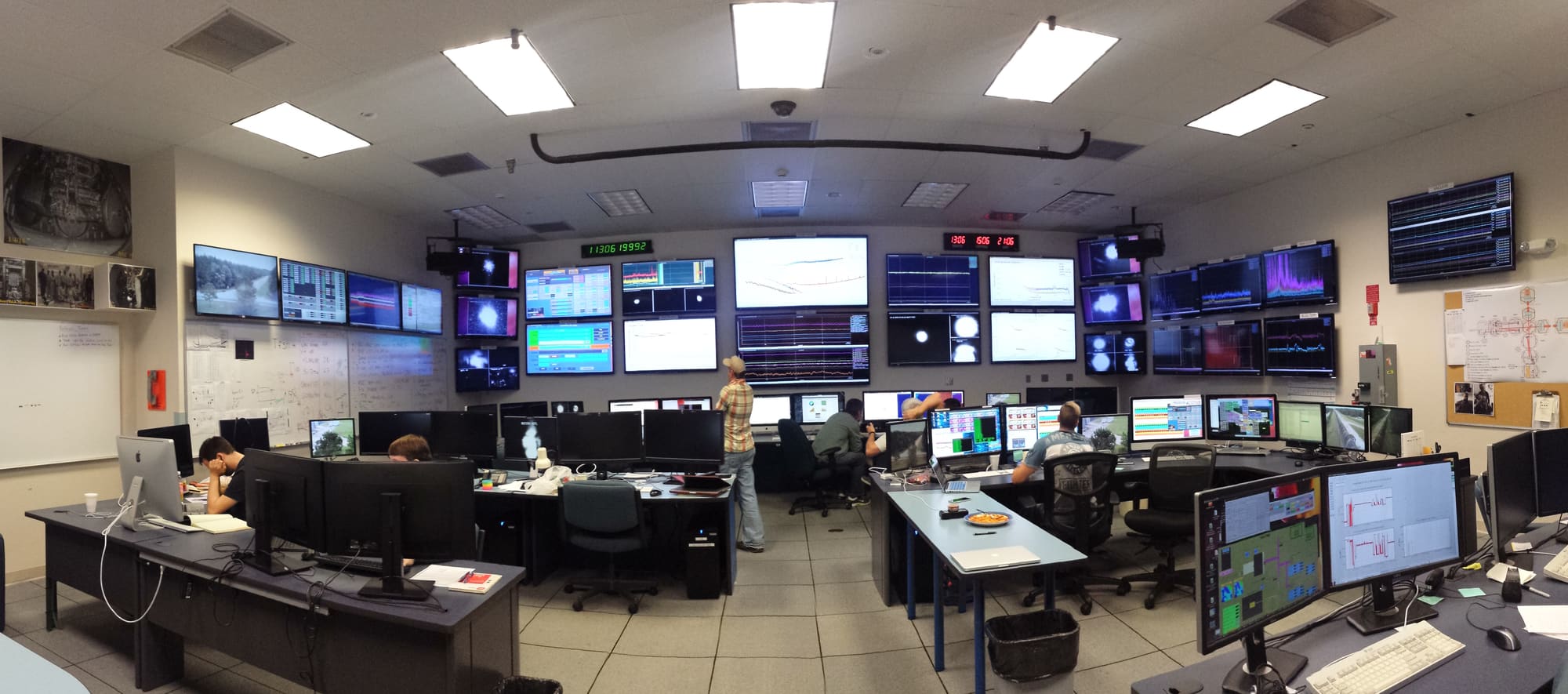
This is multi-messenger astronomy, and it depends on speed. Kilonovae fade quickly, and early observations in the first few hours are the most valuable for working out what the explosion is made of. But speed brings mistakes. In the third observing run, the LVK published 80 public alerts. Twenty-four were later retracted, and 11 more did not survive the slower, more careful offline analysis. Some of the false alarms had already sent telescopes chasing shadows.
The culprit is usually a "glitch", a burst of noise from the detector or its surroundings that can mimic the shape of a real signal. Telling them apart quickly is precisely the job for which GWSkyNet was built.
Reading the shape of the sky
The original GWSkyNet, developed by Miriam Cabero and colleagues in 2020, took an unusual approach. Instead of examining the raw detector data, as the search pipelines do, it studies what those pipelines produce: the sky map. Every alert carries a file describing where on the sky the source probably lies and how far away it is. Real astrophysical signals tend to produce sky maps with a certain internal consistency. Glitches, which are not coming from anywhere in particular, often do not.
The new paper, GWSkyNet-II, led by Man Leong Chan and Jess McIver of the University of British Columbia with collaborators at Caltech, McGill, Cardiff, Penn State and elsewhere, describes a thorough rebuild. GWSkyNet is a convolutional neural network, the same broad family of AI used in image recognition, and it now looks at a full-resolution projection of the sky map alongside three images that slice the three-dimensional probability "cloud" of the source's location from different angles. It also reads a handful of numbers, including which detectors registered a strong signal, the estimated distance, and two statistical measures of how well the data fit a coherent astrophysical signal rather than noise.
The team retrained it on real noise from the third observing run, using about 17,400 examples split roughly evenly between simulated mergers and genuine glitches. Many of those glitches were catalogued by Gravity Spy, a project in which citizen scientists help classify detector noise by eye. They then fine-tuned the network on candidates thrown up during a 40-day rehearsal, in which tens of thousands of fake signals were injected into real detector data and replayed as if live.
:::note How GWSkyNet-II performed
- Rehearsal test: 4,016 candidates, of which 3,913 were simulated signals, 96 were glitches and 7 were real events
- At a 20 per cent false-alarm rate: the fine-tuned model caught 92.5 per cent of real signals, against 68.3 per cent for the untuned version
- Generous setting (score 0.75): rejects about 80 per cent of noise while keeping about 93 per cent of genuine signals
- Strict setting (score 0.91): rejects about 90 per cent of noise while keeping about 80 per cent of signals
- Speed: for 95 per cent of the alerts it analysed in the fourth run, its verdict arrived within 66 seconds of the alert going out :::
A score, not a verdict
The output is a single number between 0 and 1, the GWSkyNet score, published alongside every eligible alert on the LVK's public database. Crucially, it comes with two companion figures describing how often noise and real signals have reached that score in testing, so that an astronomer can choose a threshold to suit their circumstances.
An observer with telescope time to spare can cast a wide net; one with a single precious night can demand near-certainty.
Tested against the 77 alerts from the third observing run, the new fine-tuned model correctly classified 67, eight more than the original version. In the fourth run it gave a score of 0.611 to one alert that was later retracted and 0 to another, correctly flagging both.
The authors are candid about the limits. Their rehearsal contained only 96 glitches, so the headline statistics are a guide rather than a guarantee. And a real signal that happens to coincide with a glitch can produce a distorted sky map. In one simulated case, the network gave a near-zero score to the sky map made with all three detectors, but 0.96 to one made without the contaminated detector. A low score, they stress, means the localisation looks inconsistent, not necessarily that nothing happened.
A sky full of alerts
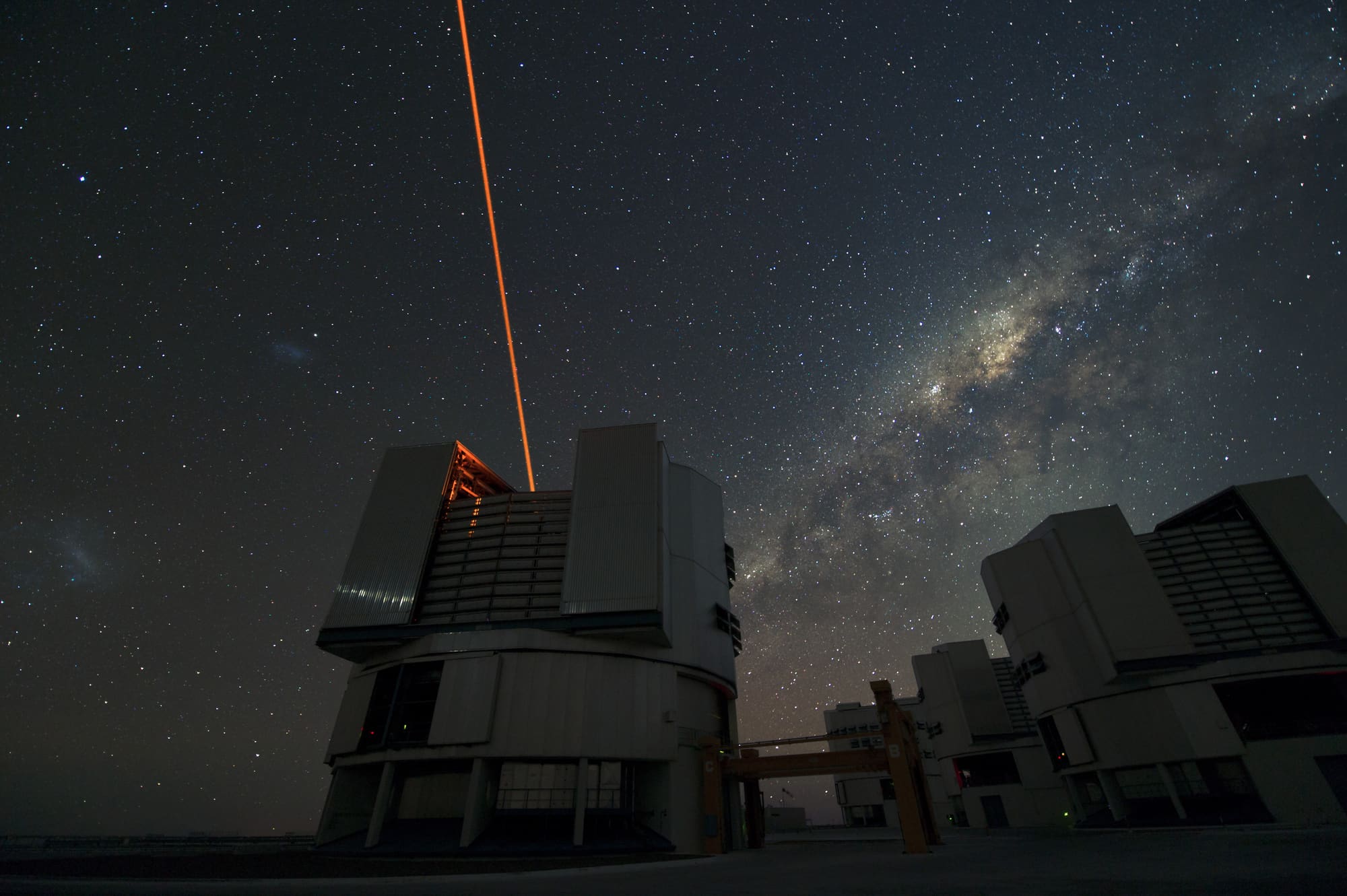
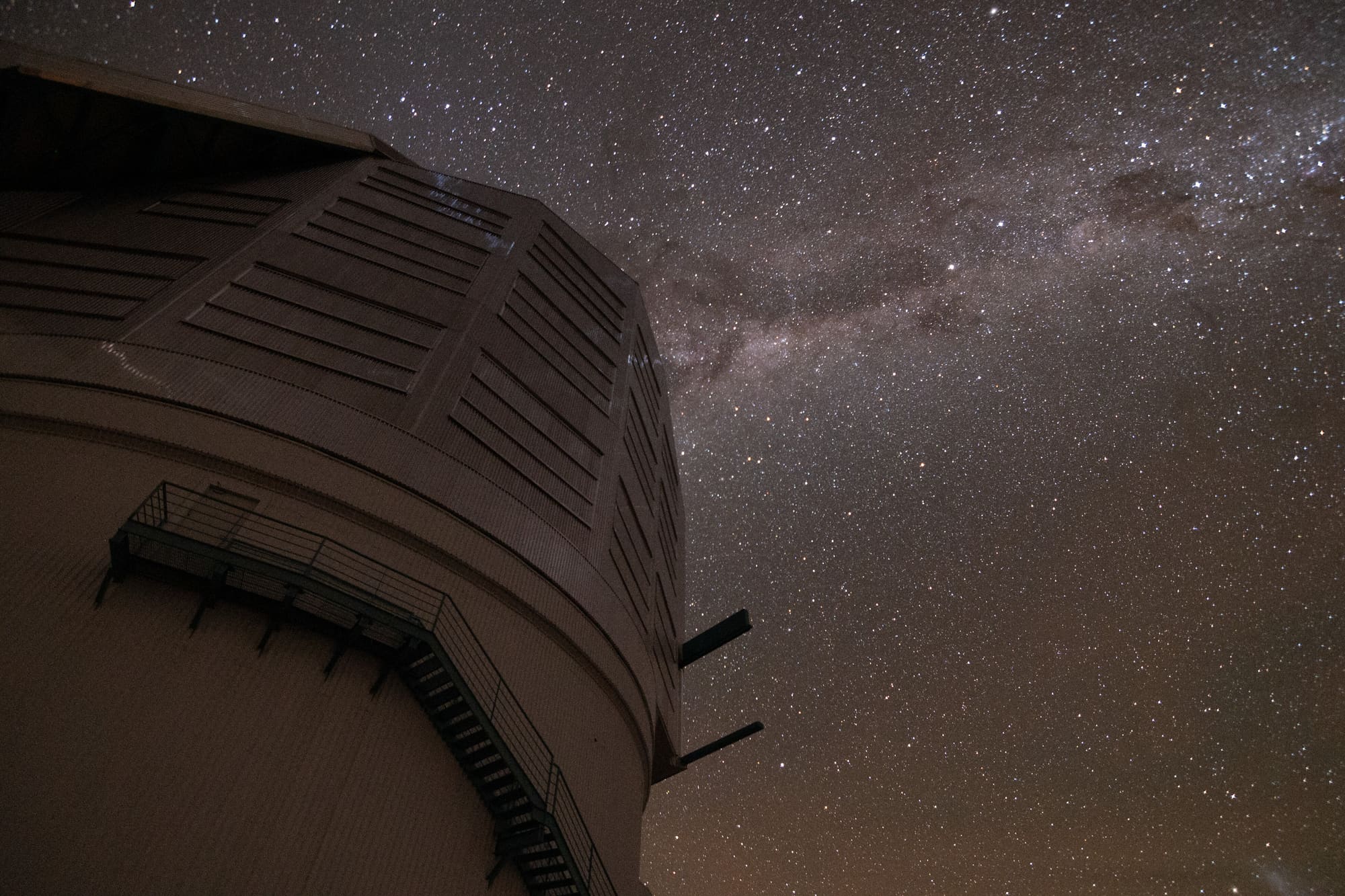
GWSkyNet is part of a wider shift. In February 2026 the Vera C. Rubin Observatory in Chile issued its first scientific alerts: 800,000 on a single night, each flagging something that had brightened, dimmed or moved. Rubin expects eventually to send out about seven million a night, each within two minutes of an image being taken, and relies on software "brokers" using machine learning to sort them.
No human team could read them all. The future of astronomy will be a partnership in which instruments listen, algorithms triage, and people decide what is worth a night of precious telescope time. GWSkyNet-II is a small, careful example of how that partnership can work: not replacing the astronomer's judgement, but giving it a head start when every minute counts.
Sources & further reading
- Chan, McIver et al., "GWSkyNet II: a refined machine learning pipeline for real-time classification of public gravitational wave alerts", arXiv:2408.06491
- LIGO/Virgo/KAGRA Public Alerts User Guide
- Chaudhary et al., "Low-latency gravitational wave alert products and their performance at the time of the fourth LIGO-Virgo-KAGRA observing run", PNAS (arXiv:2308.04545)
- GraceDB: LIGO/Virgo/KAGRA public alerts, O4
- Max Planck Institute for Gravitational Physics: LIGO-Virgo-KAGRA Collaboration wraps up its fourth observing run
- LIGO Caltech: GW170817 and the dawn of multi-messenger astronomy
- NOIRLab: NSF–DOE Rubin Observatory launches real-time monitoring of the night sky
Filed under Science. Spotted an error? Tell the editors.