Why Some People Struggle to Understand Speech Even When They Can Hear Sounds
Being able to hear a voice but not make out the words is one of the commonest complaints in audiology. Science is finally explaining why the ears and the brain can disagree.
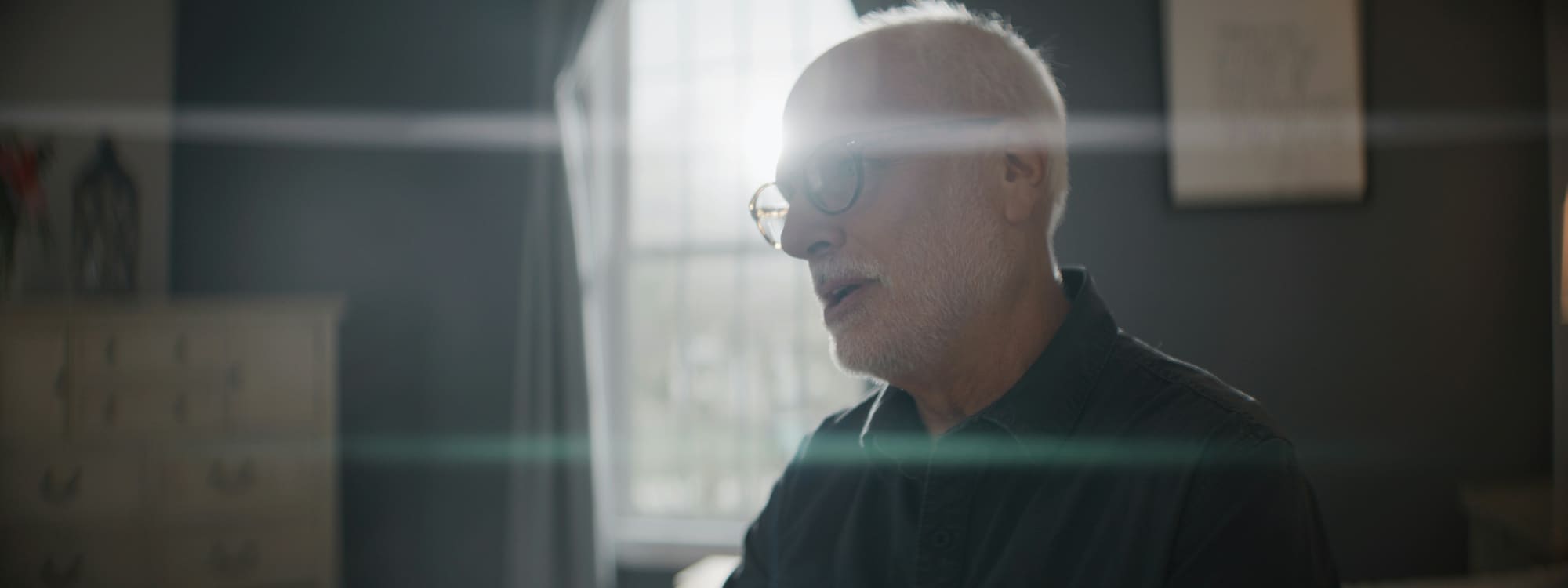
Think of a family supper with eight people at the table. Your grandson is telling a story at the far end. You can hear his voice clearly, rising and falling, and you can tell when the punchline lands because everyone laughs. But the words themselves seem to arrive with their edges sanded off. "Sink" or "think"? "Fifteen" or "fifty"?
Then comes the frustrating part. You sit in a quiet booth pressing a button for faint beeps, and are told your hearing is normal, or only mildly reduced. Both things can be true. Detecting sound and understanding speech are separate abilities, and the second depends on more than the ears.
What the beep test misses
The standard pure-tone audiogram measures the quietest tones you can detect at different pitches in a silent room. But life is not a silent room, and a sentence is not a pure tone.
Speech is lopsided. Vowels carry most of its loudness, while consonants such as s, f and th are quieter and higher in pitch, and they carry much of its meaning. Age-related hearing loss tends to affect high frequencies first, so the consonants go before the vowels. Speech sounds loud enough but blurred, which is why asking people to speak up often helps less than expected.
The audiogram can also miss damage deeper in the system. In 2009 Sharon Kujawa and Charles Liberman at Harvard Medical School and Massachusetts Eye and Ear exposed mice to noise that caused a temporary, fully recovered hearing loss. The hair cells survived, yet many synapses linking them to the auditory nerve were permanently lost. This cochlear synaptopathy became known as "hidden hearing loss", because it does not show up in the usual test.
Ten years later the same group looked for it in people. Examining ears donated by 20 people aged from newborn to 89, they found that loss of auditory nerve fibres far outstripped loss of inner hair cells. In seven of the eleven people over 60, more than 60% of the nerve fibres had been lost compared with the youngest ears. Such disconnection, the authors noted, would barely affect the audiogram but would probably make hearing in noise harder.

The fine print of sound
Speech has two layers. One is the envelope: the slow swell and fade of loudness that marks out syllables. The other is the temporal fine structure: the rapid oscillations within each frequency band, which the healthy auditory nerve tracks with great precision.
In 2006 Christian Lorenzi, Brian Moore of the University of Cambridge and colleagues published a study in PNAS that separated the two. They split speech into 16 frequency bands and processed each so that it kept only the envelope, or only the fine structure. After training, normal-hearing listeners got about 90% right with either version. Young and older listeners with moderate hearing loss coped almost normally with the envelope version but did very poorly with fine structure alone.
That matters because fine structure seems to help us listen in the dips: catching fragments of a voice in the brief moments when background noise drops. Among the younger hearing-impaired listeners, those who used fine structure least gained least from those gaps. Without it, a noisy room becomes a solid wall.
When the brain is the bottleneck
Some people struggle even when the ear passes every test. Auditory processing disorder (APD) describes difficulty making sense of sounds that stems from how the brain's auditory pathways handle them, rather than from the ear itself. The British Society of Audiology recognises it in children and adults. NHS audiology services describe adults who have normal results on standard tests yet keep reporting trouble in cafés, group conversations and other noisy places.
Then there is cognitive load. Understanding degraded speech is like reading a smudged letter. You can do it, but it takes concentration. The Framework for Understanding Effortful Listening, published in 2016 by an international group led by Kathy Pichora-Fuller, describes listening effort as the deliberate spending of limited mental resources. The more the brain spends on decoding, the less it has left for remembering what was said, following the thread or thinking of a reply. That helps explain the fatigue, and the temptation to stop joining in.
The words arrive, but the brain is too busy decoding to keep hold of them.

Measuring the right thing
Audiologists increasingly test what people actually struggle with. The QuickSIN test, developed in the United States in 2004, plays sentences against the babble of four other talkers. The voice gets steadily quieter relative to the babble, and the score estimates how loud it needs to be for the listener to repeat half the key words. Each list takes about a minute. The result is a figure called "SNR loss": how many extra decibels of clarity you need compared with a typical listener.
The Dutch digits-in-noise test, described by Cas Smits and colleagues in 2013, is even simpler. You hear three spoken digits in noise and type them in, and the test adjusts as you go. Its reference values were collected from 1,386 listeners over the age of 60, and because it uses only numbers it can be run over the telephone or online.
:::note The numbers
- Over 60%: nerve fibre loss in seven of eleven people over 60 in a 2019 study of donated ears, with little effect expected on the audiogram
- About 90% vs very poor: how normal and hearing-impaired listeners scored on speech that kept only its fine timing
- About 1 minute: the time to run one QuickSIN list
- About 7%: the share of dementia worldwide that the 2024 Lancet Commission links to hearing loss
- 3 million: UK adults who use hearing aids, out of an estimated 10 million who could benefit (RNID) :::
Why it matters beyond the dinner table
There is a bigger reason to take this seriously. In July 2024 the Lancet Commission on dementia prevention, led by Gill Livingston of University College London, named 14 modifiable risk factors. Together they account for an estimated 45% of dementia cases worldwide. Hearing loss is one of the largest, linked to around 7%, and the Commission recommends making hearing aids available to everyone who needs them. A population figure like this does not predict any one person's risk, and a link is not the same as proof of cause.
The evidence that treatment helps is still developing. In the ACHIEVE trial, published in The Lancet in 2023, 977 adults aged 70 to 84 with untreated hearing loss received either hearing aids with counselling or a health-education programme. Over three years, overall cognitive decline was no different between the groups. A pre-planned analysis did find a difference between the trial's two groups of volunteers, with a possible benefit among those already at higher risk, and researchers are still following it up. Even so, the case for treating hearing loss rests on everyday quality of life: conversation, confidence and staying connected.
If you recognise yourself in the supper-table scene, ask your GP to refer you, or book an assessment with an audiologist, and say specifically that noisy places are the problem. A good audiologist will test your hearing in noise as well as in silence.
Sources & further reading
- Kujawa, S. G. & Liberman, M. C. (2009). Adding insult to injury: cochlear nerve degeneration after "temporary" noise-induced hearing loss. Journal of Neuroscience
- Wu, P. Z. et al. (2019). Primary neural degeneration in the human cochlea: evidence for hidden hearing loss in the aging ear. Neuroscience
- Lorenzi, C. et al. (2006). Speech perception problems of the hearing impaired reflect inability to use temporal fine structure. PNAS
- Pichora-Fuller, M. K. et al. (2016). The Framework for Understanding Effortful Listening (FUEL). Ear and Hearing
- Killion, M. C. et al. (2004). Development of a quick speech-in-noise test (QuickSIN). JASA
- Smits, C., Goverts, S. T. & Festen, J. M. (2013). The digits-in-noise test. JASA
- British Society of Audiology position paper on auditory processing disorder
- Livingston, G. et al. (2024). Dementia prevention, intervention, and care: 2024 report of the Lancet standing Commission. The Lancet
- Lin, F. R. et al. (2023). Hearing intervention versus health education control to reduce cognitive decline (ACHIEVE). The Lancet
- Betsi Cadwaladr University Health Board (NHS Wales): Auditory processing disorder in adults
- RNID: Facts and figures on hearing loss in the UK
Filed under Hearing & Sound. Spotted an error? Tell the editors.