Could Artificial Intelligence Become Your Personal Health Companion?
Google trained a version of its Gemini model to read a month of wearable data and coach people on sleep and fitness. The results are impressive in places, and instructive in others.
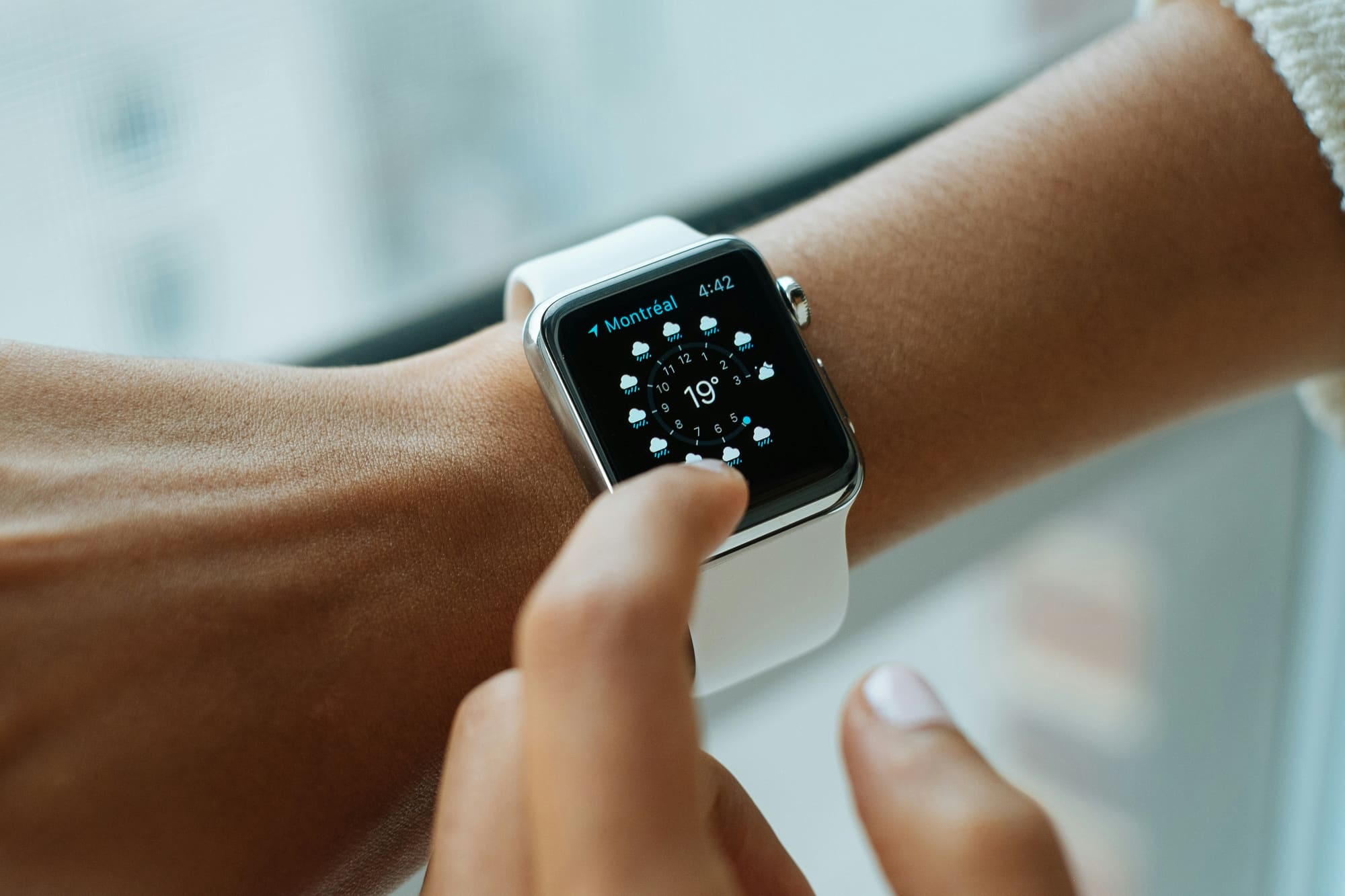
Your watch knows when you went to bed last Tuesday. It knows your resting heart rate crept up over the past fortnight, that your deep sleep shrinks on nights after a late dinner, and how many minutes you spent running uphill on Sunday. What it cannot do, at least not yet, is sit you down and explain what all of that means.
That gap between data and advice is what a team at Google set out to close. Their model, the Personal Health Large Language Model or PH-LLM, was first described in a 72-page arXiv preprint in June 2024 and later published in Nature Medicine in 2025. It is a careful piece of work, and reading it closely tells you a good deal about both the promise and the limits of an artificial health companion.
Teaching a chatbot to read a wearable
Large language models such as Gemini are trained on vast quantities of text. They can discuss sleep hygiene fluently, but a month of numbers from a wrist sensor is a different kind of input. The Google team took Gemini Ultra 1.0 and fine-tuned it, which means giving it further specialised training, to interpret and reason over aggregated daily data from Fitbit and Pixel Watch devices.
To do that they built 857 case studies drawn from real, consenting users: 507 about sleep and 350 about fitness. A sleep case included up to 29 days of bedtimes, wake times and time spent in each sleep stage, along with age and gender. A fitness case covered 30 days of training load, sleep and health measures such as resting heart rate. For each, the model had to produce what a good coach would: insights about what looks unusual, likely causes, and personalised recommendations.
The benchmark was human. Six sleep medicine specialists, with between 4 and 46 years of experience, and seven fitness experts with backgrounds in athletic training wrote their own responses to a held-back set of cases. Then experts rated every response, whether written by a person or by a model, against 15 questions on a five-point scale, covering things like use of the individual's data, personalisation, domain knowledge, invented details and potential for harm.
How it compared with the experts
In fitness, PH-LLM held its own. Its overall performance was statistically indistinguishable from that of the human trainers, and it matched them on three of the four sections of the coaching reports. The exception was training load, the assessment of how hard someone has been working and whether they are recovering, where the human experts scored higher.
Sleep was a different story. PH-LLM's responses averaged 4.61 out of 5 against 4.75 for the sleep physicians. That is a small gap, and the model earned the top mark in 73 per cent of its ratings, but it was a real and statistically significant one. Fine-tuning helped: it raised the average from 4.51 to 4.61, with the clearest gains in spotting meaningful patterns and explaining their likely causes. Recommendations, the part that most directly affects what you would do, showed no improvement from the extra training.
The exam results
The headline-grabbing figures came from multiple-choice tests. The team assembled 629 sleep medicine questions from board-certification preparation banks and 99 questions modelled on the strength and conditioning specialist exam set by the US National Strength and Conditioning Association.
PH-LLM scored 79 per cent in sleep medicine and 88 per cent in fitness. A sample of five sleep specialists, averaging 25 years of experience, scored 76 per cent on a subset of the sleep questions; five athletic trainers scored 71 per cent in fitness. Both are above the roughly 70 per cent pass mark. It is worth noting, though, that the original Gemini Ultra 1.0 already scored 77 and 88 per cent, so most of that exam knowledge was present before any fine-tuning. And answering exam questions is not the same as noticing that the person in front of you is not getting enough sleep.
Answering exam questions is not the same as noticing that the person in front of you is not getting enough sleep.
:::note The numbers
- 857 real-world case studies: 507 on sleep, 350 on fitness
- 4.61 vs 4.75: average expert rating of PH-LLM and of human sleep physicians on sleep coaching
- 79% and 88%: PH-LLM's scores on sleep medicine and fitness exams, against 76% and 71% for human expert samples
- 12 of 16: sleep outcomes where feeding raw sensor data to the model beat describing it in text :::
Predicting how people feel
The third experiment was perhaps the most forward-looking. Using data from thousands of people who had also filled in standard questionnaires about sleep disruption and sleep impairment, the team asked whether the model could predict people's own reports of their sleep from 15 days of wearable data covering 20 measurements.
Simply describing the numbers to the model in words did not work well. So the researchers added an adapter, a small neural network that translates sensor data directly into the model's internal language. With it, PH-LLM did significantly better than text prompting on 12 of the 16 outcomes and performed about as well as a conventional statistical model, logistic regression, trained for the job. It did not beat it. That is a sober and important result: for straightforward prediction, a well-made traditional model is still a strong competitor.

The limits, in the authors' own findings
The paper is admirably candid about its weaknesses. The model sometimes invented or misreported details from a user's data, at rates similar to the other response sources. Experts noted that it occasionally failed to flag under-sleeping as a potential cause of harm, and that it sometimes missed warning signs of detraining, such as a rising resting heart rate. In some responses it was too cautious to be useful. Ratings clustered at the top of the scale, which made it harder to separate good from excellent, and raters could sometimes tell which answers came from a machine.
Most importantly, nobody tested whether following PH-LLM's advice actually changed anyone's behaviour or health. The study was funded by Google and all its authors were employees of Alphabet, and they state plainly that further development and evaluation are needed before such a tool is used in the safety-critical domain of personal health.
So, could AI become your personal health companion? On the evidence of this study, it is already a knowledgeable one, at ease with the textbook and capable of reading a month of data sensibly. It is not yet a substitute for a specialist who can ask the follow-up question, and it is certainly not a replacement for your GP. The most realistic near future may be a helpful translator between your wearable and your own common sense, with a doctor still on hand for anything that worries you.
Sources & further reading
- Cosentino J, Belyaeva A, Liu X, et al. Towards a Personal Health Large Language Model. arXiv:2406.06474
- Khasentino J, Belyaeva A, Liu X, et al. A personal health large language model for sleep and fitness coaching. Nature Medicine, 2025
- Google Research: A personal health large language model for sleep and fitness coaching
- Chinoy ED, et al. Performance of seven consumer sleep-tracking devices compared with polysomnography. Sleep, 2021
This article is for general information and is not a substitute for personal medical advice. If you have concerns about your health, please speak to your GP or a qualified professional.