Why the Brain Is So Good at Recognising Familiar Voices
A single word down a crackly phone line is often enough to tell you who is calling. Behind that everyday feat lies a dedicated network in the brain, and a surprising benefit for ageing ears.
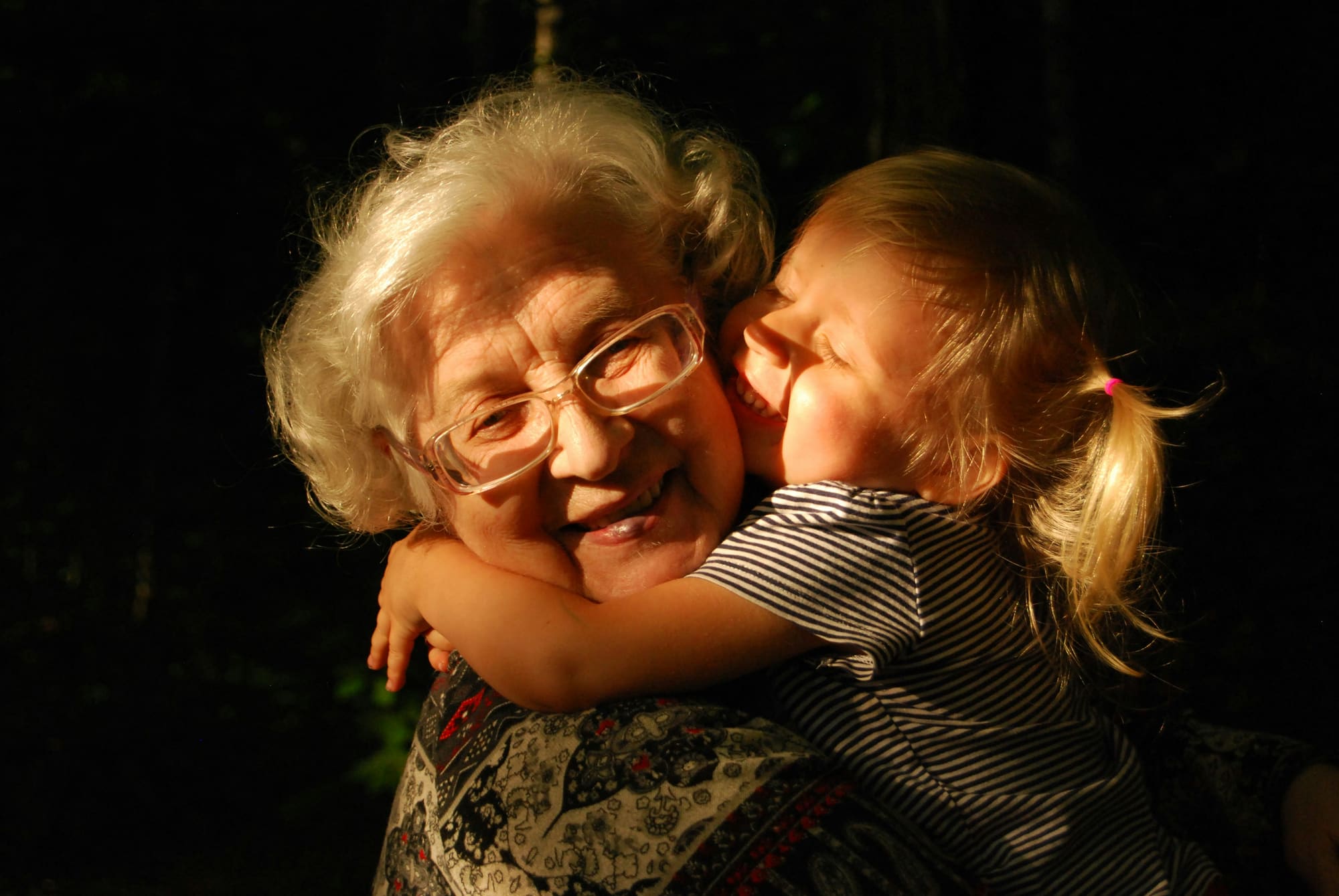
The phone rings, you pick it up, and someone says "Hello, it's me." Two words, squeezed through a narrow telephone channel, and you already know whether it is your sister, an old friend or your son calling from abroad. You could not easily describe what makes their voice theirs. You simply know.
That small act draws on one of the brain's most specialised skills. Recognising who is speaking is a separate task from understanding what they say, and it seems to have its own machinery. It also turns out to be a quiet ally for anyone who finds conversation harder to follow than it used to be.
The brain's own voice areas
In 2000 Pascal Belin, Robert Zatorre and colleagues at the Montreal Neurological Institute published a short paper in Nature that changed how scientists think about the auditory cortex. Using functional MRI, they played volunteers a mix of sounds: speech, vocal sounds without words, and non-vocal sounds from the environment. Regions along the upper bank of the superior temporal sulcus, a groove running along the side of the brain, responded much more strongly to voices than to anything else. This was true whether or not the voice was saying words.
Some of these regions still preferred voices when they were compared with carefully matched control sounds, including scrambled voices. The authors suggested they might be the auditory counterpart of the brain's well-known face areas. They are now called the temporal voice areas. In 2015 Belin's group, by then at the University of Glasgow, published a standard scan for finding them. It located voice-sensitive patches on both sides of the brain in 94% of the adults tested, falling into three clusters along the temporal lobe, with smaller contributions from regions including the amygdala.
We seem to carry the ear's equivalent of a face area: patches of cortex that care, above all, about voices.
When voices lose their owners
The clearest evidence that voice identity has its own machinery comes from people who lack it. In 1982 Diana Van Lancker and Gerald Canter coined the term phonagnosia to describe a failure to recognise familiar voices after brain injury. Hearing and understanding speech could remain intact while the identity of the speaker was lost.
For years it was thought to arise only from damage. Then in 2009 Lúcia Garrido, Brad Duchaine and colleagues in London described KH, a 60-year-old professional woman who said she had always struggled to recognise voices. Her hearing was normal and a brain scan showed no damage. In testing she failed to recognise famous voices and could not learn new ones, yet she performed well on nearly everything else. That included recognising emotion in voices, recognising faces, understanding speech and identifying music and environmental sounds. Hers was the first reported case of developmental phonagnosia. The authors concluded that recognising who is speaking depends on mechanisms separable from those used for other information in a voice.

A spouse in a crowded room
Familiarity does more than tell us who is talking. It helps us hear them. In 2013 Ingrid Johnsrude of Queen's University in Canada, with Robert Carlyon of the MRC Cognition and Brain Sciences Unit in Cambridge and colleagues, tested married couples aged 44 to 79. Each partner recorded scripted instructions. Later, wearing headphones, each heard their spouse's recording played at the same time as an unfamiliar voice matched for age and sex, and had to report what one of the two had said.
Listeners were much more accurate when their spouse was the target. The study, published in Psychological Science under the title "Swinging at a Cocktail Party", also showed that people could use their knowledge of a familiar voice to tune it out, which helped them follow a stranger. The most striking finding concerned age. Performance declined with age when the target voice was unfamiliar, but there was no decline when the target was the listener's spouse. Johnsrude told reporters that the benefit of familiarity is very large, comparable to the benefit of hearing two voices from different directions.
A 2018 follow-up by Emma Holmes, Ysabel Domingo and Johnsrude found something stranger still. Among pairs of friends who had known each other for at least six months, familiar voices remained easier to understand even after the researchers altered them so much that listeners no longer recognised who was speaking. The brain, it seems, uses voice knowledge in more than one way, and not all of it reaches conscious awareness.
:::note How the spouse study worked
- Who: married couples aged 44 to 79
- What they heard: their spouse and an unfamiliar talker of matched age and sex, speaking simultaneously through headphones
- The task: report the instructions given by one of the two voices
- The result: accuracy for the spouse's voice did not fall with age, while accuracy for strangers did :::
The first voice we know
Our attachment to familiar voices starts before birth. In 1980 Anthony DeCasper and William Fifer showed in Science that newborns could learn to suck on a dummy in a particular rhythm to hear a recording of their mother's voice, and that they produced her voice more often than another woman's. The womb muffles sound, but rhythm and melody get through.
The bond does not fade quickly. In 2016 Daniel Abrams and colleagues at Stanford scanned 24 children aged 7 to 12 as they heard nonsense words spoken by their own mothers and by other women. The children identified their mothers from clips lasting less than a second with over 97% accuracy. Their mothers' voices engaged not only hearing areas but also regions involved in emotion, reward and face processing. Children whose brain regions were more strongly connected while hearing their mothers' voices had stronger social communication skills.

A loved one's voice may even soothe the body. In a 2010 study led by Leslie Seltzer at the University of Wisconsin–Madison, 61 girls aged 7 to 12 completed a stressful public-speaking and maths task. Some were then comforted by their mothers in person, some by a telephone call alone, and some had no contact. Girls who only heard their mother's voice showed rises in oxytocin, a hormone linked to bonding, and their levels of the stress hormone cortisol fell, ending up close to those of girls who received hugs.
Keeping the voices close
All this adds up to a gentle argument for staying in touch, and for keeping talking. Familiar voices are among the easiest sounds for an ageing ear to follow, and frequent conversation keeps them familiar. If you find even well-known voices getting harder to follow, particularly on the phone or in company, it is worth raising with your GP or asking for a hearing assessment. Hearing support can help keep those voices within reach.
Sources & further reading
- Belin, P. et al. (2000). Voice-selective areas in human auditory cortex. Nature
- Pernet, C. R. et al. (2015). The human voice areas: spatial organization and inter-individual variability. NeuroImage
- Garrido, L. et al. (2009). Developmental phonagnosia: a selective deficit of vocal identity recognition. Neuropsychologia
- Johnsrude, I. S. et al. (2013). Swinging at a cocktail party: voice familiarity aids speech perception in the presence of a competing voice. Psychological Science
- ScienceDaily: Familiar voices easier to understand for older adults (2013)
- Holmes, E., Domingo, Y. & Johnsrude, I. S. (2018). Familiar voices are more intelligible, even if they are not recognized as familiar. Psychological Science
- DeCasper, A. J. & Fifer, W. P. (1980). Of human bonding: newborns prefer their mothers' voices. Science
- Abrams, D. A. et al. (2016). Neural circuits underlying mother's voice perception predict social communication abilities in children. PNAS
- Stanford Medicine: Mom's voice activates many different regions in children's brains
- Seltzer, L. J., Ziegler, T. E. & Pollak, S. D. (2010). Social vocalizations can release oxytocin in humans. Proceedings of the Royal Society B
Filed under The Mind. Spotted an error? Tell the editors.