The Psychology Behind the Habits That Actually Stick
Forget the 21-day rule. The science of habit says the real work is slower, kinder and more about where you are than who you are, and that one missed day doesn’t undo anything.

Every January, the same promise does the rounds: do something for 21 days and it becomes a habit. It is a tidy number. It is also not what the research shows.
When psychologists actually followed people trying to build new routines, they found the process took much longer, varied enormously from one person to the next, and depended less on willpower than on something far more mundane: the place, the time and the cue. The good news is that, once you understand how habits form, you can stop fighting yourself and start arranging your days so the habit does the work.
The slow curve of automaticity
The landmark study came from Phillippa Lally and colleagues at University College London, published in the European Journal of Social Psychology in 2010. They recruited 96 volunteers and asked each to choose one new healthy behaviour to perform daily in response to a consistent cue: a piece of fruit with lunch, a 15-minute run before dinner, 50 sit-ups after the morning coffee. For 84 days, participants logged online whether they had done it and how automatic it felt, using statements such as "I do it automatically".
The pattern was a curve, not a switch. Early repetitions produced the largest gains in automaticity; after that, progress slowed and levelled off at a plateau. On average it took 66 days to get within reach of that plateau, but the range ran from 18 days to a predicted 254. About half the participants had not reached it by the end of the 84 days. Exercise habits took roughly one and a half times as long to settle as eating or drinking habits.
One finding deserves to be better known. Missing a single day had little effect on the long-term curve. Many missed repetitions did lower the eventual level of automaticity, but a lapse was not a reset. The 19th-century psychologist William James had warned that new habits must be practised without exception. The data were more forgiving.
The study has limits. It relied on people's own reports of how automatic a behaviour felt, and the 66-day figure comes from the subset of participants whose data fitted the model well. But its central message has held: habit formation is gradual, and the timetable is personal.
Where you are matters more than who you are
If Lally's work describes the shape of habit, Wendy Wood's explains the mechanism. Wood, a psychologist at the University of Southern California, has spent decades studying what people do when they are not really thinking about what they are doing.
In diary studies published in 2002, Wood, Jeffrey Quinn and Deborah Kashy asked volunteers to report hourly on what they were doing, thinking and feeling. When people were acting out of habit, their minds tended to drift to unrelated topics; when doing something new, their thoughts tracked the action. Wood has since summarised her research as finding that about 43 per cent of what people do every day is repeated in the same context, usually while thinking about something else.
The key word is context. In Wood's account, each time an action is repeated in the same setting and rewarded, the brain strengthens a link between that setting and the response, until the setting alone is enough to trigger it. In a 2005 study, Wood and colleagues followed students transferring to a new university. Habits such as exercising, reading the paper and watching television tended to survive only where the context stayed similar. When the familiar cues vanished, people fell back on deliberate intentions, for better or worse.
That has a practical edge. Big changes such as moving house, retiring or starting a new job dissolve old cues, which makes them good moments to plant new ones. Wood also stresses friction: people who seem to have iron self-control often simply live in environments where the good choice is the easy one. And she argues rewards should be immediate, because the brain's learning signal fades fast; a payoff weeks away teaches the habit system very little.
A lapse was not a reset.
If this, then that
A third strand of research offers the most portable tool. Peter Gollwitzer, a psychologist at New York University and the University of Konstanz, studies what he calls implementation intentions: plans that specify exactly when, where and how you will act, in the form "If situation X arises, then I will do Y".
The format sounds almost too simple. Yet a 2006 meta-analysis by Gollwitzer and Paschal Sheeran, pooling 94 independent tests, found that forming such plans had a medium-to-large effect on reaching goals. A UK study by Sarah Milne, Sheina Orbell and Sheeran showed the difference vividly. Among 248 participants, motivational material about the health risks of inactivity raised people's intentions to work out but did not significantly change what they did. Adding a simple written plan of when and where they would exercise had a large effect on actual behaviour. A newer meta-analysis by Sheeran, Gollwitzer and colleagues, drawing on 642 tests, continues to find that such plans help people regulate their actions.
Why does it work? An if-then plan borrows the logic of habit before the habit exists, handing the decision to a cue rather than to memory or mood.

Two to five months, and other honest numbers
Is 66 days the true figure? In 2024, Ben Singh and colleagues at the University of South Australia published a systematic review and meta-analysis in the journal Healthcare, pooling 20 studies with 2,601 participants and covering behaviours from flossing and drinking water to physical activity and healthy eating.
Only four of those studies actually measured how long habits took to form. Their median times ranged from 59 to 66 days, their means from 106 to 154 days, and individuals varied from as little as 4 days to as many as 335. The authors' summary: health habits typically take two to five months to become automatic. Simpler behaviours fared better than complex ones. Morning practice beat evening practice in one stretching study, habits people chose for themselves were stronger than ones assigned to them, and stable, consistent contexts helped. The authors stress caution, since many included studies carried a high risk of bias and the timing estimate rests on a handful of trials.
:::note Try this
- Anchor it: attach the new behaviour to an existing cue ("After I pour my morning coffee, I will write three lines in my journal")
- Keep it simple: simpler behaviours become automatic sooner than complex ones
- Choose it yourself: self-selected habits tend to be stronger than assigned ones
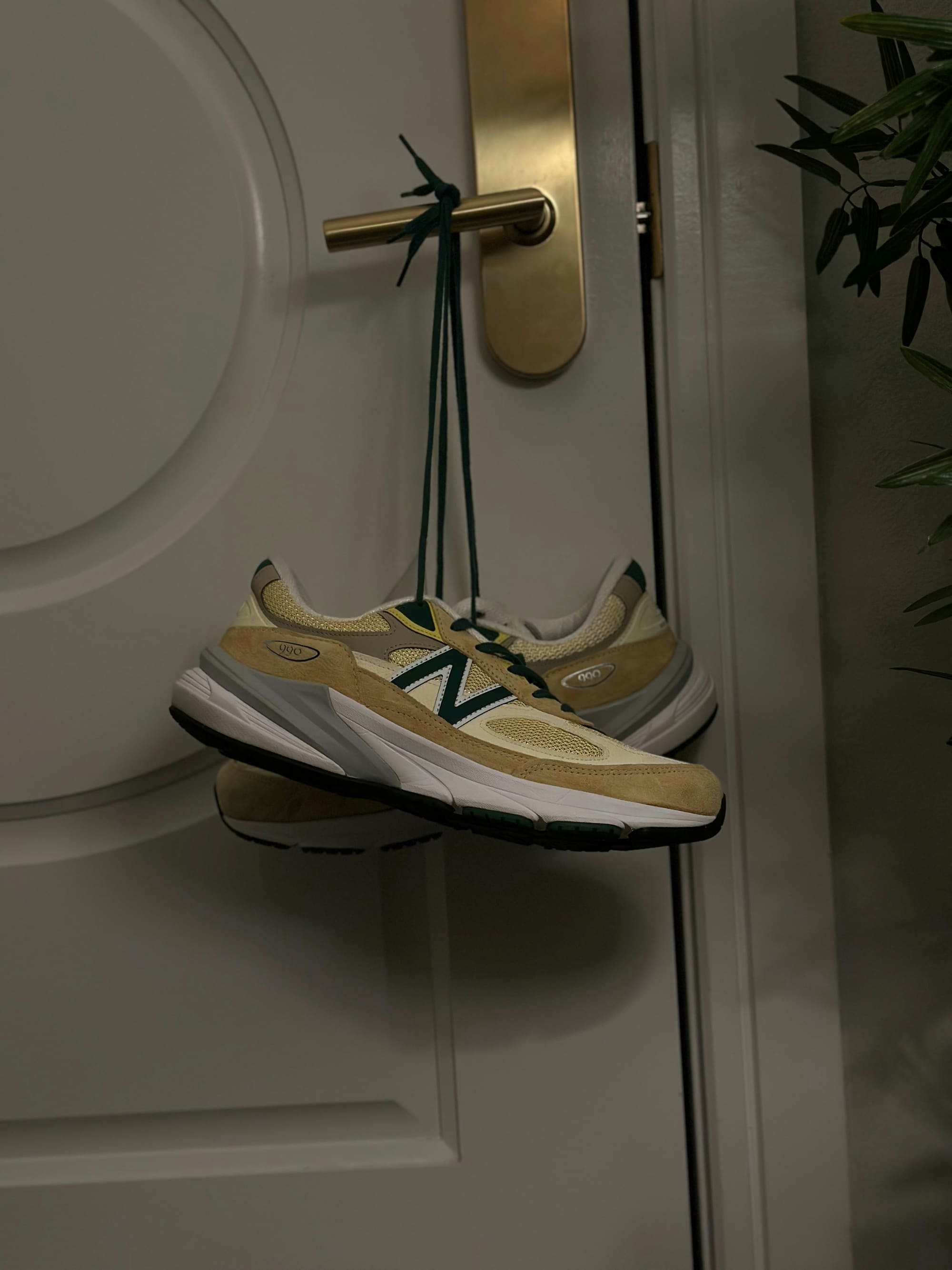
- Remove friction: put the shoes by the door, the book on the pillow
- Forgive the gaps: a single missed day barely dents long-term progress
- Think in months: expect two to five, not three weeks :::
Building the groove
Put together, the research tells a consistent story. Habits are not acts of heroic will. They are associations, slowly laid down between a situation and a response. Motivation gets you to the starting line; context and repetition carry you over it.
So if your new routine still feels like effort after three weeks, that is not failure. It is week three of something that may take a season. Keep the cue in place, keep the action small, and let the curve do its slow, reliable work.
Sources & further reading
- Lally et al., "How are habits formed: Modelling habit formation in the real world", summarised by the BPS Research Digest
- Singh et al., "Time to Form a Habit: A Systematic Review and Meta-Analysis of Health Behaviour Habit Formation and Its Determinants", Healthcare (2024)
- Wood, Quinn and Kashy, "Habits in everyday life: Thought, emotion, and action", Journal of Personality and Social Psychology (2002)
- Wood, Tam and Guerrero Witt, "Changing circumstances, disrupting habits", Journal of Personality and Social Psychology (2005)
- Good Habits, Bad Habits: A Conversation with Wendy Wood, Behavioral Scientist
- Gollwitzer and Sheeran, "Implementation intentions and goal achievement: A meta-analysis of effects and processes" (2006)
- Milne, Orbell and Sheeran, "Combining motivational and volitional interventions to promote exercise participation", British Journal of Health Psychology (2002)
Filed under The Mind. Spotted an error? Tell the editors.